

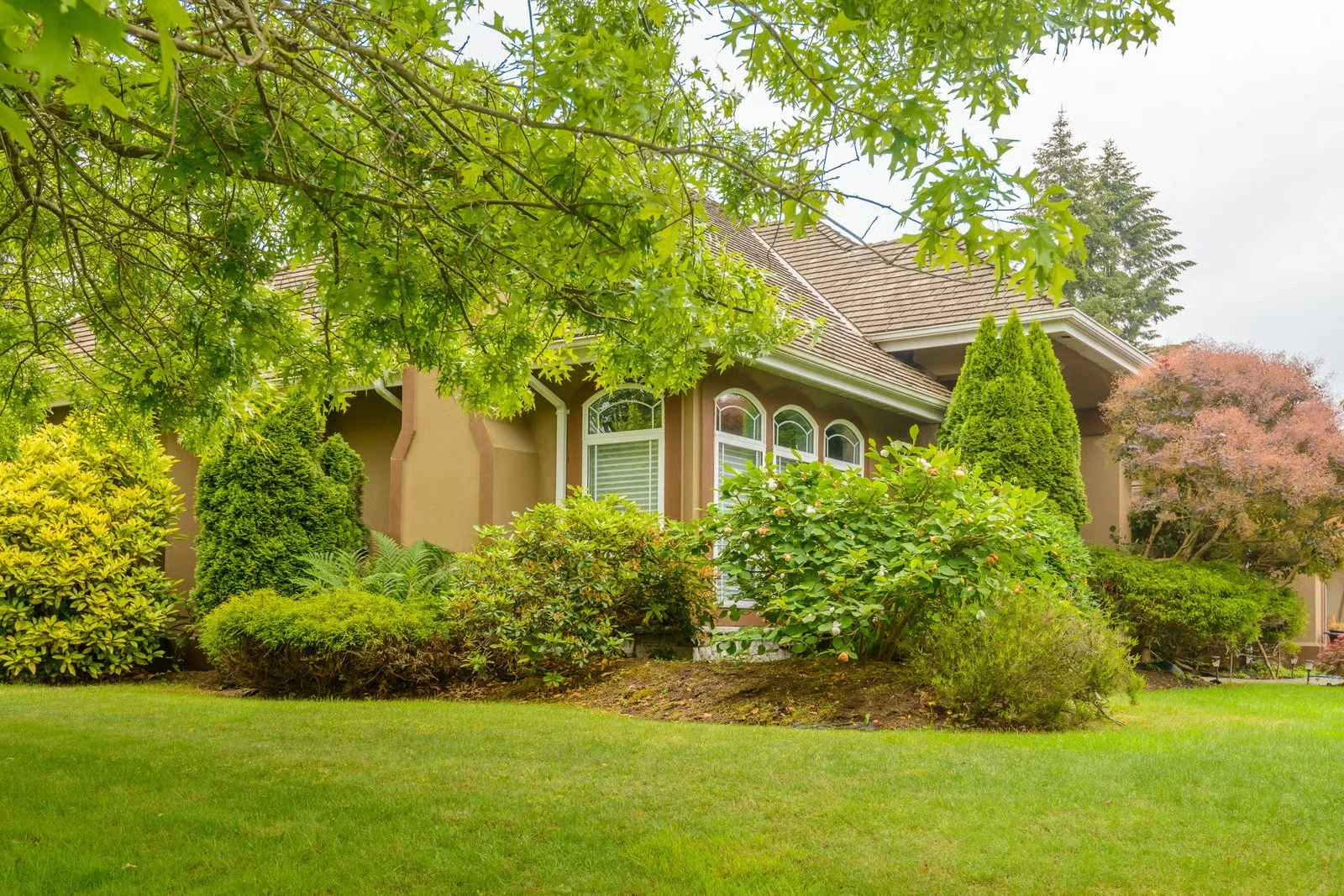
Shrub Problems Solved| Portsmouth & NH Seacoast
Residential shrub pruning problems we solve throughout the NH Seacoast & Southern Maine

Most shrub problems in residential landscapes develop gradually — overgrowth blocks windows, plants decline from improper care, repeated shearing creates dense outer shells with weak interiors, and shrubs slowly outgrow their intended spaces. By the time homeowners notice, the issue often feels bigger than it is.
At Expert Pruning, we’ve spent decades solving these challenges using methods grounded in plant biology rather than quick fixes that create new problems. Our methodological approach is always plant-first.
Each situation requires a different strategy. Overgrown shrubs benefit from staged renovation. Declining shrubs need diagnosis before cutting. Misshapen growth calls for selective thinning — not more shearing. Shrubs blocking walkways or windows require reduction to strong lateral branches, not topping.
Understanding these distinctions produces lasting, healthy results — and landscapes that feel refined rather than repeatedly corrected.
Restoring Overgrown & Neglected Shrubs
Bringing overgrown plantings back into balance
Foundation shrubs often outgrow their space over time. Hedges become dense walls. Specimen shrubs overwhelm beds that once framed them properly. The instinct may be to cut everything back at once, but sudden heavy reduction can weaken the plant and trigger unstable regrowth.
Our approach is gradual and measured. Renovation is typically staged over two to three seasons, allowing the plant to respond steadily rather than react defensively.
In the first season, we remove a portion of the oldest stems near the base and thin interior growth to allow light into the plant. This encourages fresh, controlled growth from lower points rather than dense shoots at the tips.
In following seasons, additional selective reduction restores proportion while preserving the plant’s natural form. Once balance is regained, a simple annual maintenance schedule prevents the problem from returning.
Some shrubs, such as lilacs and spirea, respond well to stronger renewal. Others, particularly many evergreens, require more conservative adjustments. Correct identification guides the approach.
🌱 Our Renovation Process
Year One: Remove up to one-third of oldest growth at base. Thin crossing branches. Allow plant to respond and assess vigor.
Year Two: Continue selective removal, shaping emerging growth. Reduce height gradually to strong laterals, never to stubs.
Year Three: Fine-tune form. Establish maintenance schedule that prevents future overgrowth—typically one pruning annually.
For shrubs with good regeneration capacity—lilacs, forsythia, spirea, viburnums—we can be more aggressive with ground-level removal. For plants that regenerate poorly—most needled evergreens, hollies, azaleas—we work conservatively, never cutting past green growth. Species identification drives the approach
A row of yews had grown to block first-floor windows completely, requiring expensive interior lighting during daylight hours. Previous contractors quoted removal and replacement at $4,200. We renovated over two seasons using selective reduction, bringing the hedge to four feet while maintaining density. Total cost: $840 over two years, and the mature hedge now needs only annual maintenance.
Diagnosing & Restoring Unhealthy Shrubs
Identifying causes of decline before pruning
We often see shrubs with yellowing leaves, sparse growth, dieback, or failure to flower—and the property owner's first instinct is to prune hoping to stimulate recovery. In most cases, pruning an already-stressed shrub makes decline worse. Unhealthy shrubs need diagnosis first, intervention second.
Common causes include poor drainage, compacted soil, nutrient deficiencies, disease or pest pressure, and damage from salt or drought. Each requires a different solution. We assess site conditions, examine soil, check for pests or disease, and evaluate recent weather before recommending any cutting.
⚠️ When NOT to Prune
Active dieback from disease or environmental stress. Severe nutrient deficiency (yellowing throughout plant). Recent transplant shock. Root damage from construction or soil compaction.
Action: Address underlying cause first. Allow recovery. Prune only dead wood until plant stabilizes.
✅ When Pruning Helps
Dense interior blocking light and air. Crossing branches creating wounds. Old unproductive wood on flowering shrubs. Recovery after pest/disease treatment.
Action: Light selective thinning improves air circulation. Remove damaged tissue. Limit to 15–20% removal on stressed plants.
For shrubs declining from compacted soil or poor drainage, we recommend soil amendment and aeration before pruning. For drought stress, we establish deep watering and wait for recovery. For pest or disease issues, we coordinate treatment timing—pruning diseased wood only after the problem is controlled, always disinfecting tools between cuts.
Our Diagnostic Approach
- Assess overall plant vigor and pattern of decline
- Examine soil conditions: drainage, compaction, pH
- Check for pest or disease indicators on leaves, stems, roots
- Evaluate site factors: light exposure, wind, salt exposure, recent disturbance
- Determine if pruning will help or harm given current plant state
- Address root causes before cutting, or work in coordination with treatment
2–3
Seasons for full renovation
30%
Maximum first-year removal
60–80%
Cost savings vs. replacement
Correcting Misshapen Shrubs
Restoring natural form through selective pruning
Shrubs that have been repeatedly sheared often develop dense outer growth and sparse interiors. Others lean toward available light or lose symmetry after storm damage.
Correction begins with opening the plant gradually. Selective thinning allows light into the interior, encouraging growth from within rather than just at the surface. Over time, this produces a fuller, more natural shape.
When shrubs have grown unevenly, we rebalance gradually rather than forcing symmetry in one season. Energy is redirected through careful cuts to encourage growth where it is needed most.
Restoration takes patience, but it produces shrubs that look natural year-round rather than only immediately after trimming.
🎯 Selective Pruning Approach
For over-sheared shrubs: We thin the outer shell gradually, making cuts back to interior laterals rather than shearing tips. Light penetrates, dormant buds activate, interior fills naturally. Plant develops balanced branching throughout rather than just a surface layer of foliage.
For one-sided growth: We prune the dense side more heavily to redirect energy toward sparse areas. Remove competing growth. The plant rebalances over one to two seasons as resources flow to areas with less foliage.
For gappy or damaged areas: We assess whether the plant can regenerate in the gap or if relocation/replacement makes more sense. Some gaps close with patient selective work; others indicate the plant has outgrown suitability for the location.
Clearing Windows, Walkways & Entrances
Reducing size without creating future
Shrubs that block windows, crowd walkways, or limit access can become both functional and aesthetic concerns. The common solution is cutting straight across at the desired height, but this often results in dense regrowth that returns quickly and requires repeated cutting.
Instead, we reduce height and spread by cutting back to appropriate side branches within the plant. This allows the shrub to maintain structure while gradually adjusting to its new scale.
When a shrub has significantly outgrown its intended location, we also consider whether ongoing reduction is practical or if replacement with a more suitable variety would offer better long-term results. Thoughtful evaluation prevents repeated correction year after year.
✂️ Proper Reduction Technique
Identify target height based on clearance needs (window sills, walkway edges, entry visibility). Trace branches from tips back to suitable laterals at target height. Make clean cuts just above lateral junctions—never to stubs. Work branch by branch, never shearing across the top. Result: controlled size with strong structure and slower regrowth.
For shrubs that have completely outgrown the space—mature sizes of 8-12 feet planted under 4-foot windows—we discuss whether ongoing reduction is cost-effective or if relocation and appropriate species selection makes more sense. Constantly fighting a plant's mature size creates perpetual expense. Sometimes the best solution is moving the plant to a suitable location and choosing a naturally compact species for the original spot.
A commercial property had topped foundation shrubs annually for eight years, spending $1,200 each visit to maintain window clearance. Within six months, regrowth blocked windows again. We removed the unsuitable species (rapid-growing burning bush) and installed compact evergreens with 3–4 foot mature heights. After installation cost of $2,800, the property now spends $300 annually on light maintenance—a 75% reduction in ongoing costs.
Why Our Solutions Last
Working with how plants grow
Lasting results come from understanding how shrubs respond to cutting, light, and environmental stress. Gradual renovation respects recovery capacity. Diagnosis addresses root causes. Selective pruning maintains natural branching.
When care aligns with the way a plant grows, improvements remain stable rather than temporary. Shrubs stay healthier, maintenance becomes more predictable, and landscapes retain their intended scale and appearance over time.
Solve Your Shrub Problems
Schedule an evaluation to diagnose your shrub issues and develop a correction plan grounded in plant biology. We serve residential properties throughout the NH Seacoast and Southern Maine.
Schedule an Evaluation