


Our Plant-First Pruning Approach
Experienced pruning professionals serving the NH Seacoast and Southern Maine
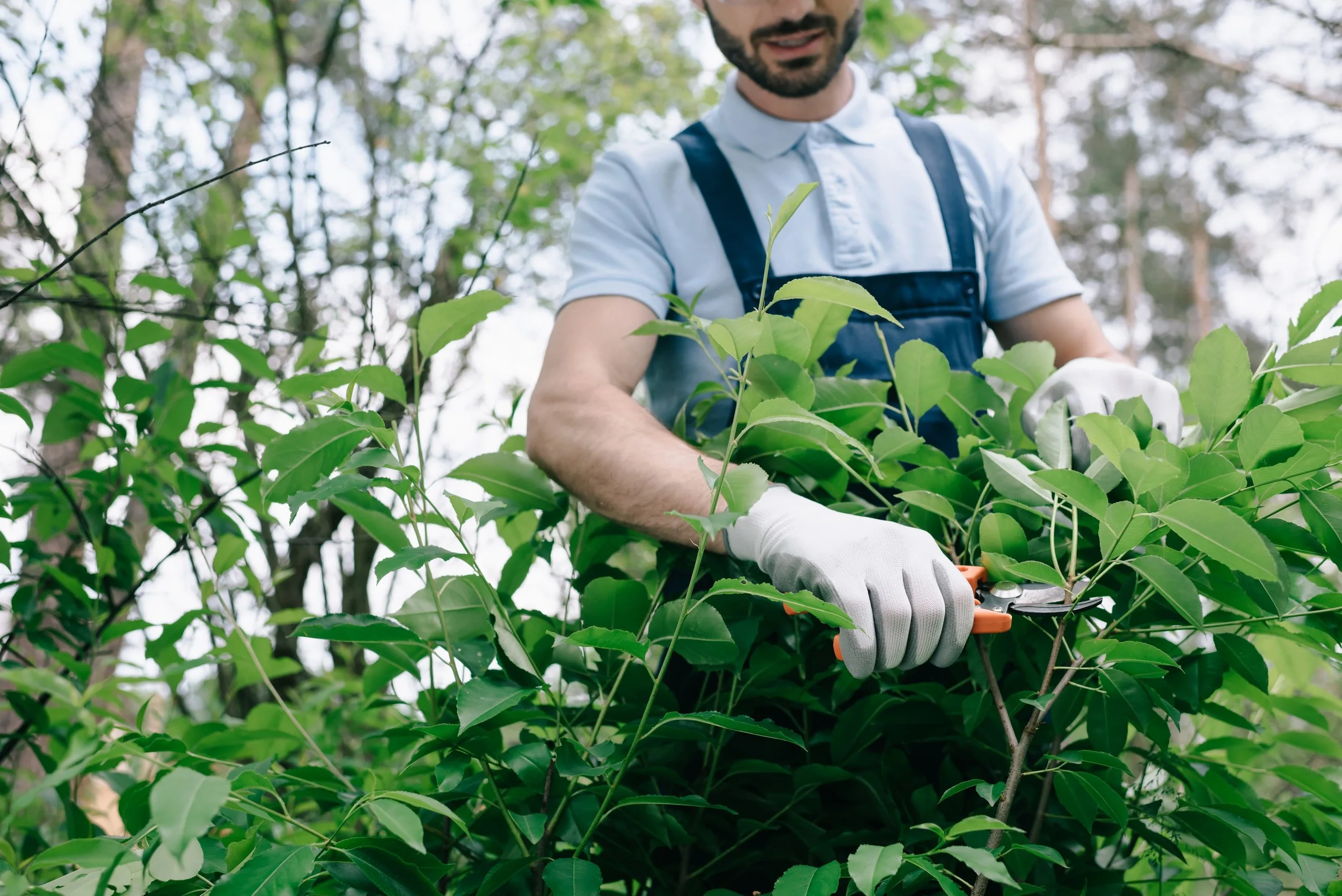
At Expert Pruning, every cut we make is guided by how plants actually grow — not by calendar dates or one-size-fits-all rules. We call this our plant-first approach, and it shapes every decision we make, from the angle of a cut to the season we choose to work.
When pruning follows plant biology, plants recover faster, hold their shape longer, and maintain their size with less intervention. For property owners along the NH Seacoast and Southern Maine, that means healthier landscapes and lower maintenance costs — typically one well-timed pruning each year rather than multiple corrective visits trying to undo the last one.
This approach is built on 25 years of working with coastal plants in real conditions: salt wind, sandy soils, and the particular rhythms of a maritime growing season. It works because it respects what each plant actually needs.
Ready to see what plant-first pruning looks like on your property? Request a consultation and we'll start with your plants, your goals, and a plan that makes sense for both.
Why Calendar-Based Pruning Fails
The hidden costs of generic timing
We often see shrubs and trees that look tidy in the short term but decline structurally within a few seasons. Generic pruning calendars ignore individual plant needs—spring bloomers lose their flower buds when pruned in March, maples bleed heavily when cut in April, and evergreens sheared in September push tender growth that winter kills.
When plants are repeatedly cut without regard to their growth patterns, they react defensively by producing weak, excessive growth that requires even more frequent pruning. Over time, this cycle increases labor costs, reduces plant lifespan, and creates ongoing maintenance problems.
One ornamental tree needed monthly visits after years of hard spring cutbacks created weak, excessive regrowth. Once we corrected the structure using plant-first methods, annual visits dropped from twelve to one—a 92% reduction in maintenance costs.
The fundamental error is treating pruning as a scheduled task rather than a response to how the plant actually behaves. A forsythia sets its flower buds in summer for the following spring—cutting those buds in March removes a year's bloom regardless of what the calendar recommends.
Understanding Plant Response
The biology behind our decisions
Plants react to cuts by redirecting energy. When you remove a branch tip, the plant responds by growing bushier below the cut. When you thin an entire branch, the plant opens up and redirects energy to remaining growth. Understanding these responses lets us create exactly the form you want with fewer cuts over time.
🌱 How Plants Grow
Remove branch tips to create bushier, denser growth—perfect for hedges and formal shapes. Thin entire branches to open structure and maintain natural form. Clean cuts in the right spots seal faster and resist disease better than ragged cuts or cuts in the wrong location.
📅 When Timing Matters
Spring bloomers like lilacs and forsythia are pruned right after flowers fade—before they set next year's buds. Summer bloomers like roses are pruned in late winter to encourage fresh growth. Evergreens are pruned in late spring when new growth hardens, giving them a full season to recover.
How We Decide When & How to Prune
Matching timing and technique to each plant
Every pruning decision answers three questions: What's the plant's growth pattern? What's your goal? What timing and technique support both? This approach produces predictable results and avoids the common pattern of cuts that fight plant biology requiring correction in subsequent seasons.
| Plant Type | When to Prune | Why This Timing Works |
|---|---|---|
| Spring Bloomers | Right after flowering | Preserves next year's buds |
| Summer Bloomers | Late winter (dormant) | Encourages vigorous new growth |
| Evergreens | Late spring | New growth hardens, fast recovery |
| Formal Hedges | Spring + midsummer | Maintains shape, allows hardening |
The technique depends on your goal. Need privacy screening? We use heading cuts to create density where you want it. Want a natural look? We thin entire branches to maintain the plant's character. Managing size? We make reduction cuts to strong side branches that maintain structure without creating weak points.
As a guardrail, we limit removal to 20-30% per season. Beyond this threshold, plants struggle and produce weak regrowth that requires corrective work in following seasons—increasing your maintenance costs rather than reducing them. We avoid heavy pruning after mid-August, giving plants time to harden growth before cold weather.
Three Questions Before Every Cut
- What's this plant and how does it naturally grow?
- What am I trying to accomplish for the property owner?
- What timing and technique support both plant health and the goal?
1×
Annual pruning vs. multiple visits
20–30%
Maximum safe removal per season
25+
Years refining plant-first methods
Long-Term Cost Savings
How plant-first pruning reduces maintenance expenses
One of the most important benefits of plant-first pruning is controlling size through biology, not constant cutting. By respecting how plants naturally grow and their mature dimensions, plants stay within their intended space with minimal annual adjustment. A hedge or shrub managed this way may need one thoughtful pruning per year instead of multiple corrective visits—translating into fewer labor hours and more predictable budgets.
A mixed shrub border had been sheared uniformly for years. Flowering declined and replacement became a regular expense. By switching to selective pruning matched to each species, bloom returned within two seasons and replacement costs dropped significantly over time.
Plant-first pruning also eliminates the common cycle where pruning problems create more pruning needs. Cuts that ignore plant biology create weak shoots that require annual removal, bare spots that never fill in, and stress that accumulates over time. Biology-based decisions prevent these cascading problems, extending plant lifespan and reducing both maintenance visits and replacement costs.
Common Mistakes We Help Clients Avoid
What goes wrong when convenience replaces biology
Most pruning failures stem from three mistakes: wrong timing for the plant's flowering habit, removing too much at once, and using techniques that fight rather than work with how the plant grows. Each creates ongoing problems that increase costs over time.
Wrong timing removes flower buds formed months earlier. A forsythia pruned in March loses the buds it set the previous summer—the plant simply skips a flowering season. This frustrates property owners who pay for regular maintenance but see declining performance.
Excessive removal beyond 20-30% eliminates the plant's ability to produce energy. Plants respond with stress symptoms—wilting, premature leaf drop, dieback—or produce weak shoots trying to replace lost capacity. Recovery requires multiple growing seasons and often the plant never fully regains its vigor.
Topping and severe heading create masses of weakly attached shoots from old wood. These grow rapidly but attach poorly, creating long-term hazards and requiring constant corrective work. The resulting maintenance cycle costs far more than proper pruning would have initially.
Why Plant-First Pruning Works
The long-term value of biology-based decisions
When pruning follows plant biology, plants recover faster, experience less stress, and maintain their form with fewer interventions over time. The initial investment in understanding how each plant responds pays dividends in reduced maintenance and healthier, longer-lived plants that perform better year after year.
Our SF+EP pruning system formalizes plant-first thinking into repeatable methods. Once you understand basic patterns—when plants flower, how they respond to cuts, how much they can safely lose—you can work with unfamiliar plants by observing their behavior. This philosophy guides every project we take on, from a single shrub to an entire property, delivering lasting success rather than short-term control.
Work With Us
Schedule a consultation to evaluate your landscape through a plant-first lens. We'll help you build a pruning plan that supports healthy growth and reduced maintenance costs across the NH Seacoast and Southern Maine.
Schedule a Consultation