

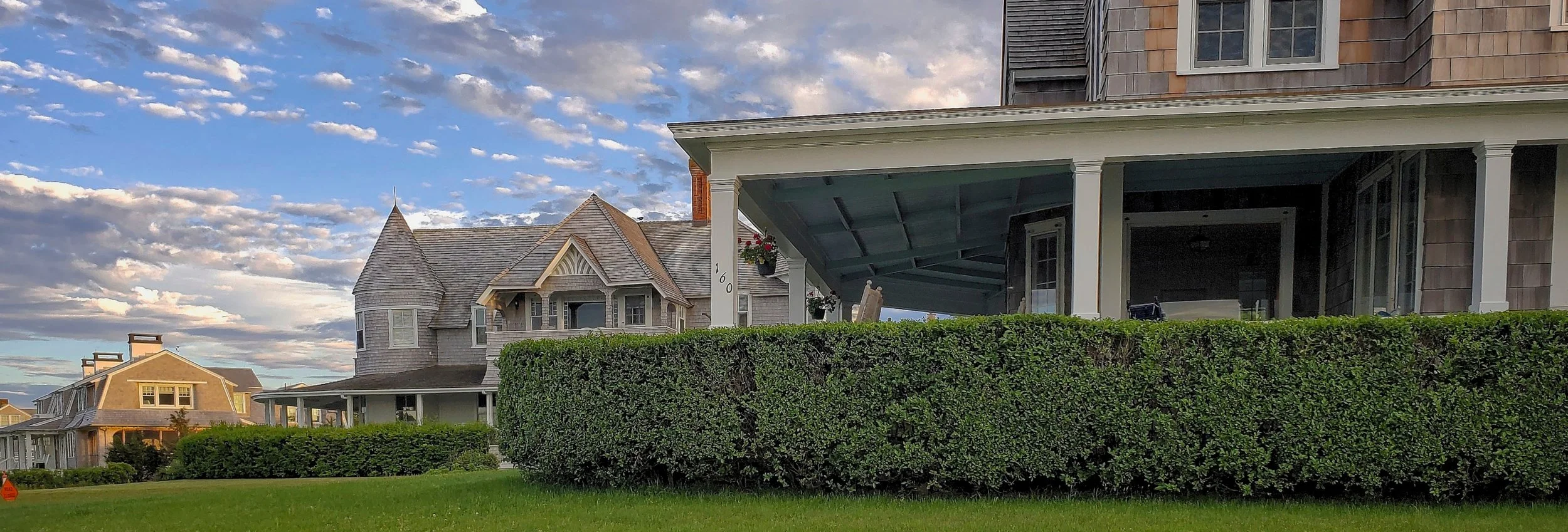
Hedge Selection & Installation| Seacoast NH
Choosing and planting the right hedge for your landscape
The hedge you choose today shapes your landscape for the next twenty to thirty years. A fast-growing arborvitae creates privacy in just a few years but requires ongoing hedge trimming to remain proportional. A slower-growing yew takes longer to fill in yet often requires far less long-term intervention once established. Understanding these differences before planting prevents years of frustration and unnecessary correction.
We regularly see the same preventable issues: a plant that outgrows its space, a species mismatched to soil or light, or a hedge that demands more maintenance than the homeowner ever intended. Getting it right from the beginning is not complicated. It requires careful site assessment, honest expectations, and thoughtful species selection aligned with long-term residential landscaping goals
Why Hedges Fail
Common mistakes and how to avoid them
Three mismatches account for most hedge failures. First, growth speed versus maintenance reality. Fast growers deliver quick results but need constant attention—two or three prunings every summer to keep them in bounds. Properties plan for once-yearly care and end up battling overgrowth. Second, mature size versus available space. Eight-foot plants under four-foot windows create a maintenance nightmare, yet we see this on nearly every block.
The third mismatch is plant tolerance versus site reality. Shade-loving species baking in full sun, drought-sensitive plants in sandy soil without irrigation, salt-sensitive varieties along driveways getting winter treatment. The plants struggle from day one. Then there are installation problems—planting too deep, poor drainage, inadequate watering—that show up as decline three to five years later when fixing them means starting over.
Choosing the Right Hedge Species
Matching plants to your needs and site
Begin by defining the hedge’s purpose. A privacy hedge or green fence requires evergreen coverage from ground to top and a species that maintains lower foliage as it matures. A formal hedge requires small leaves and tolerance for precise shaping. A simple boundary marker may require presence without dominance.
Next, evaluate what the site can genuinely support. Shade limits options primarily to yew and certain hollies. Sandy soil favors drought-tolerant species unless irrigation is provided. Heavier soils require plants that tolerate periodic moisture. Exposure, wind, and winter conditions must be considered calmly and realistically.
🌲 Evergreen Hedge Options
Arborvitae: The popular choice for good reason — fast growth (12–18 inches per year), soft texture, affordable. Gets you privacy quickly but needs ongoing management. Once you cut past the green needles into bare brown wood, that section stays brown forever. Works beautifully when you accept the maintenance commitment.
Yew: The hedge that does what you need with minimal fuss. Grows slowly (4–6 inches per year) but tolerates deep shade, accepts hard pruning, and regenerates from old wood. Toxic to pets and livestock. Our go-to recommendation for low-maintenance formal or informal hedges.
Boxwood: Classic formal hedge with naturally compact growth and fine texture perfect for shearing. Very slow (2–4 inches annually) but stays in bounds. Boxwood blight is a concern in some areas — choose resistant varieties. Best for shorter formal hedges where you want traditional elegance.
Holly: Native inkberry holly makes excellent informal hedges, while English and blue hollies work for formal use. Moderate growth, evergreen coverage, produces berries if you include a male pollinator. Increasingly popular as a boxwood alternative.
🌿 Deciduous Hedge Options
Privet: Grows like crazy (24–36 inches per year), fills fast, accepts aggressive pruning. Semi-evergreen in mild winters. Choose this when you need quick screening and don't mind frequent maintenance. Not the most refined option but gets the job done.
Hornbeam: Creates elegant architectural hedges like those in formal European gardens. Holds its dried leaves through winter for partial screening. Takes time to establish (8–12 years to full formal structure) but creates something genuinely special if you're patient.
Here's something worth considering: fast growers reach target height in three to four years but need pruning two or three times every summer once they do. Slow growers take six to eight years to fill but might need attention only once or twice a year after that. Over fifteen years, the slow growers often cost less in maintenance even though they cost more upfront and take longer to establish.
💡 Not sure which hedge is right for your property? Call Expert Pruning at (603) 999-7470 or schedule online for a site visit and species consultation throughout Seacoast NH and Southern Maine.
18–24"
Spacing for compact evergreens
6–10 yr
Fill time for low-maintenance choices
80–85%
Success rate with proper planting
Privacy Hedges and Green Fences
Dense screening that stays that way
A privacy hedge functions as a living wall. It must maintain foliage from ground to top without thinning at eye level. Species selection and taper are essential.
Six to eight feet provides screening for most properties. Taller heights may be necessary in select situations, but scale should always complement the architecture rather than overwhelm it.
🏡 Best Privacy Hedge Choices
For fast results (4–6 years to full privacy): Green Giant Arborvitae reaches 12–15 feet quickly but needs ongoing reduction. Emerald Green Arborvitae grows slower (10–12 feet mature) and stays more manageable. Both need full sun and consistent moisture.
For minimal long-term care (6–10 years to fill): Hicks Yew creates upright screening to 10–12 feet with almost no maintenance once established. Inkberry Holly reaches 6–8 feet, tolerates wet sites, and is native. Both accept shade better than arborvitae.
For compact spaces (4–6 feet mature): Compact yew varieties, Inkberry 'Compacta' (native), or dwarf English boxwood where blight isn't a concern. These stay naturally small instead of fighting you every year.
Spacing determines how quickly you get privacy and how much maintenance you'll do later. Plant closer (18-24 inches for smaller shrubs, 24-36 inches for larger ones) and you'll get visual screening faster but the plants will merge and need reduction sooner. Space wider (36-48 inches) and you wait longer for the gaps to close but maintain more individual plant character and delay the constant-reduction phase.
"Green fence" is landscape-speak for very tight spacing—plants nearly touching at 12-18 inch intervals for immediate privacy. It works when you need screening now and accept high maintenance going forward. The plants start growing into each other from day one. Good for new construction or urgent privacy needs, but understand it's a maintenance commitment from the start.
A property we worked with needed privacy from a new development but wanted to minimize long-term care. Fast arborvitae at tight spacing would have delivered immediate results but meant annual reduction starting in year four — roughly $280–320 every year, adding up to about $3,600 over twelve years. We proposed yew at wider spacing for $180 more upfront but only biannual maintenance starting year eight — about $1,200 over twelve years. They chose the yew, accepted the wait, and are now enjoying the savings.
💡 Planning a privacy hedge? Expert Pruning provides species selection, spacing layout, and professional installation throughout Portsmouth & New Castle and Rye and North Hampton. Call (603) 999-7470 or reach out online.
Formal and Ornamental Hedges
Geometric precision and classic elegance
Formal hedges require species that tolerate precise shaping and develop dense outer growth. Boxwood remains the traditional choice. Yew provides similar refinement at greater heights. Hornbeam offers architectural structure where evergreen coverage is not essential.
After many years of shaping, formal hedges develop woody interior frameworks. If renovation is ever required, the species must be capable of regenerating from older wood. Boxwood, yew, and hornbeam respond well. Arborvitae and most conifers do not.
Be realistic about maintenance. Geometric precision requires multiple sessions during the growing season. If that commitment is not sustainable, a softly rounded natural form may be the wiser and more graceful choice.
✨ Formal Hedge Choices
Boxwood (classic low formal, 2–4 feet): The traditional choice for parterres and knot gardens. English boxwood for very formal work, American for slightly larger hedges. Needs 2–3 shearings per season to maintain geometric precision. Choose blight-resistant varieties ('Green Velvet', 'Green Mountain') or accept replacement risk. Prefers good drainage, tolerates shade.
Yew (versatile formal, 4–12 feet): Works at any height from low borders to tall screens. Dark green year-round, extremely shade-tolerant, regenerates beautifully from old wood. Slow growth means less frequent shearing than boxwood. Toxic to livestock and pets. Our recommendation for low-maintenance formal hedges.
Be realistic about maintenance. Geometric precision requires shearing two to three times per growing season—May, July, and September for boxwood keeping crisp edges; June and August minimum for yew or hornbeam. Single annual shearing produces a nice rounded informal look, but not the formal geometric character. If you're planning formal hedges, budget for multiple sessions or accept that the hedge will gradually relax toward informal.
Formal hedges get planted tighter than informal screening. Boxwood goes in at 12-15 inches on center for low formal edges. Yew at 18-24 inches for hedges targeting 4-6 feet. Hornbeam at 24-30 inches for tall screens. This tight spacing creates faster fill but commits you to formal shearing from the beginning—wider spacing shows individual plant gaps that work against the formal effect.
Hedge Installation and Replacement
Getting it in the ground right
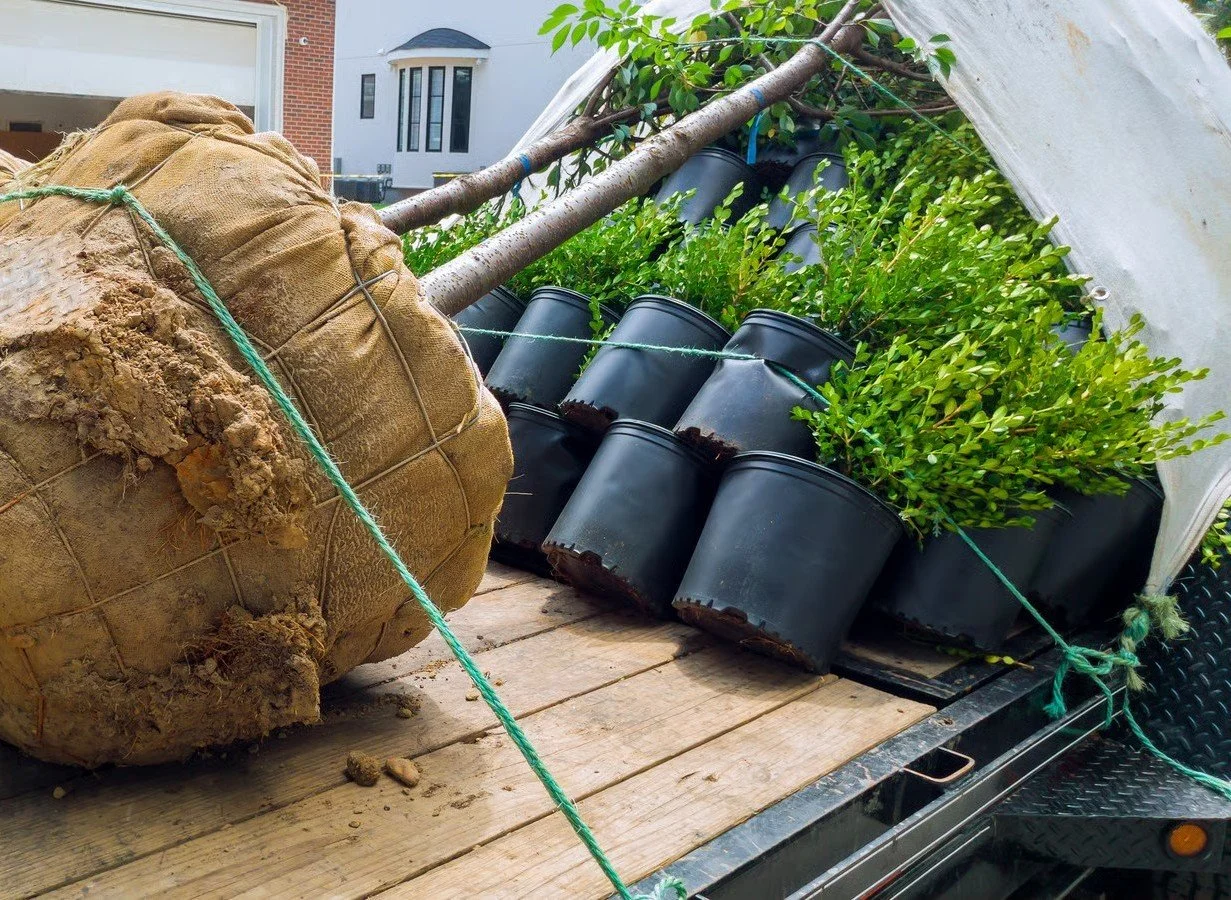
Timing matters for establishment success. Spring planting (April-May) gives you a full growing season for roots to establish before winter, but you'll need to stay on top of watering through summer. Fall planting (September-October) benefits from cooler temperatures and natural rainfall, but only gives six to eight weeks of root growth before freeze-up. Both work well when you follow through with proper aftercare.
Summer installation (June-August) creates the most stress and typically shows lower success rates—70-75% versus 85-90% for spring or fall. Heat, drought, and active growth combine to challenge new plants. We avoid it when possible, but when schedules demand it, we water more frequently, provide temporary shade on exposed sites, and choose container-grown stock with established roots.
🌱 Installation Essentials
Soil prep: Dig your trench 18–24 inches deep and 24–36 inches wide. Test drainage by filling with water — if it's still standing after six hours, you have a problem. Either amend heavily with compost or install drainage before planting. Never put plants where water stands.
Planting depth (critical): This kills more hedges than anything else. Plant at the same depth as the container or slightly higher — an inch or two above grade is fine. The top of the root ball should be visible after backfilling. Too deep and you're essentially smothering the plant. It might take three to five years to show, but it will fail.
Backfill and water: Use your native soil for backfill, not amended mix that creates drainage problems at the interface. Firm gently to eliminate air pockets but don't compact. Water thoroughly immediately — 5–10 gallons per plant. Create a low soil ridge around each plant to hold water at the roots.
Mulch: Apply 2–3 inches of shredded bark or wood chips over the root zone, keeping it 3–4 inches away from the stems. This conserves moisture, moderates soil temperature, and suppresses weeds. Don't pile it against the stems — that causes rot and invites rodents.
First-year watering determines whether your hedge makes it. New plants need deep watering twice weekly during the growing season (April through October) when it's not raining substantially. Each watering should saturate the root zone 12-15 inches deep—that's 15-20 minutes with a soaker hose or 5-10 gallons per plant by hand. Light surface sprinkling doesn't cut it and actually encourages shallow rooting.
Establishment takes longer than you think. Container-grown evergreens installed in spring usually establish within one season, but you'll still need to help them through the second summer. Fall installations and larger specimens might need two full growing seasons of supplemental watering. Don't assume establishment just because they survived the first winter—many poorly-established hedges fail during the second summer drought.
Replacement Installation Approach
- Remove the old failed hedge completely, getting out as much root as practical.
- Figure out why it failed — wrong species, poor drainage, not enough care, disease.
- Fix the underlying problem before planting again.
- Consider if the same location makes sense or if moving the hedge solves the issue.
- Install replacement using proper technique and lessons learned from the failure.
- Commit to rigorous first-year care to avoid repeating the mistake.
Learn from failures. Arborvitae that grew too large and got topped into brown doesn't mean arborvitae is the wrong choice—it means you needed a compact cultivar instead of the full-size version. Boxwood that died from blight suggests choosing resistant varieties or switching to yew or holly. Hedge that died from poor drainage needs drainage fixed before replanting, not just a different species. Understanding what went wrong prevents expensive repeats.
Why Getting It Right Matters
The long view on hedge decisions
A hedge is a decades-long decision. The species chosen, spacing established, and care provided during the first two years determine whether the hedge becomes an asset or an ongoing frustration.
Well-selected and properly installed hedges integrate seamlessly into residential landscaping and require measured, predictable care. Poorly matched hedges create stress for both plant and homeowner.
Over time, thoughtful installation reduces correction, minimizes unnecessary replacement, and preserves the structure that green fences and privacy hedges are meant to provide.
If you are considering a privacy hedge or green fence, we welcome a conversation to establish a clear, long-term plan tailored to your property.
Professional Hedge Selection and Installation
We provide species selection, site assessment, professional installation, and establishment care throughout Seacoast NH and Southern Maine.
Schedule Consultation