

Identify Your Ornamental Trees | Seacoast NH & So. Maine
Common ornamental trees for coastal properties
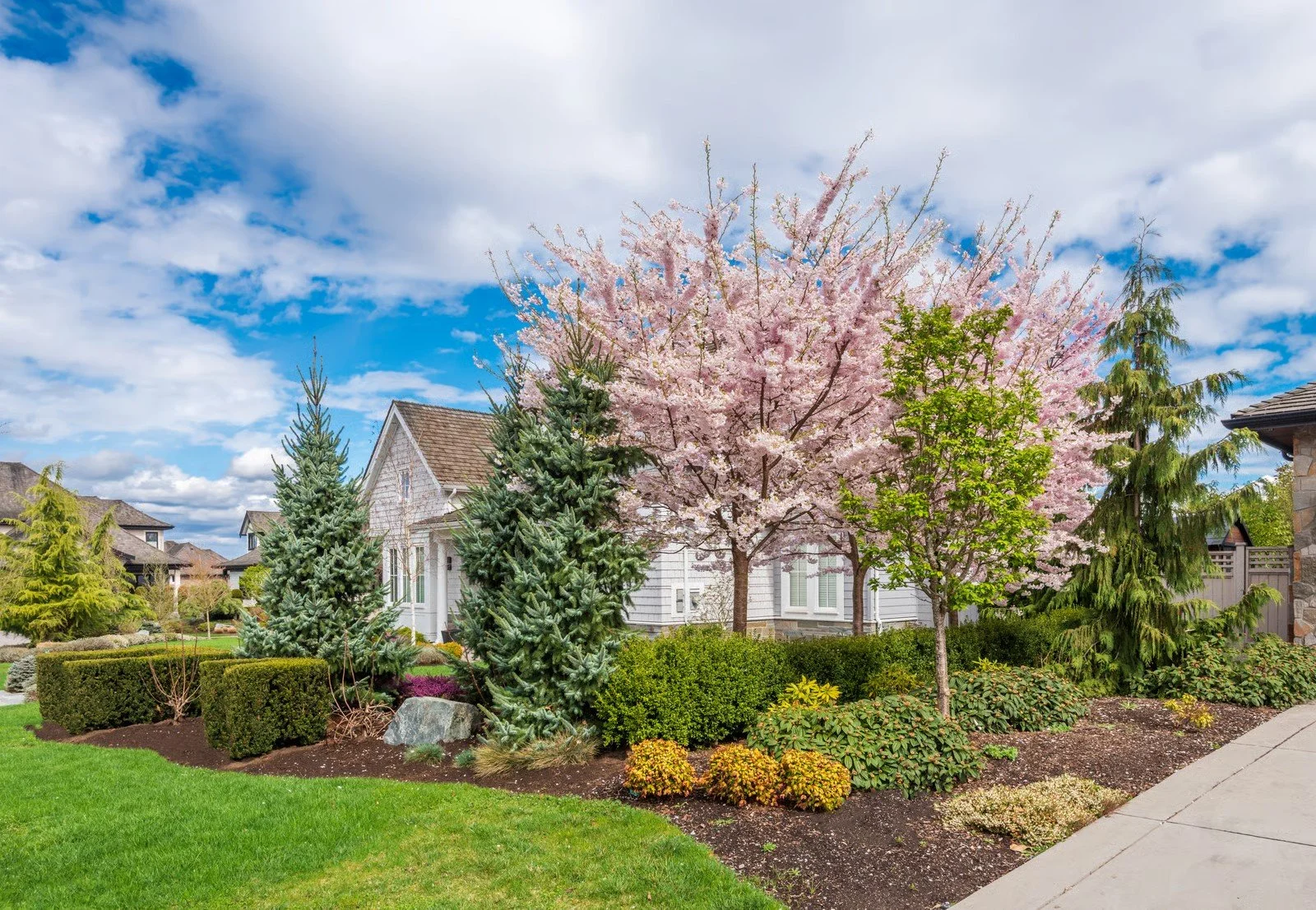
Identifying the ornamental trees on your Seacoast NH, Southern Maine, or Southern New Hampshire property helps you understand their pruning requirements, seasonal care needs, and long-term management. This guide focuses on small to medium ornamental trees commonly found in Zone 6b coastal landscapes throughout the region—trees we work with regularly on residential properties across coastal Maine and the broader Seacoast area.
Knowing whether your tree is evergreen or deciduous, spring-blooming or valued for other seasonal interest, determines appropriate pruning timing and care methods. Expert Pruning's plant-first approach emphasizes correct identification as the foundation for proper tree care—our team's knowledge base covers the full range of ornamental trees found in coastal New England, allowing us to match pruning timing and technique to each tree's specific biology and growth habit. This expertise prevents common mistakes like removing flower buds through incorrect seasonal timing or compromising tree structure through improper branch removal.
Evergreen Trees
Trees that keep their foliage year-round
Evergreen trees retain foliage through winter, providing year-round structure, screening, and windbreak value. In Seacoast NH and Southern Maine, most evergreen ornamental trees are needled conifers, with very few broadleaf evergreens hardy to Zone 6b. These trees benefit from minimal pruning, primarily to remove dead wood, correct form, or manage size when absolutely necessary.
Needled Evergreen Trees
Eastern White Pine (Pinus strobus) – Soft blue-green needles in bundles of 5, fast-growing, native, reaches 50–80 feet. Tolerates pruning when young but best left natural in maturity.
Norway Spruce (Picea abies) – Dark green needles, graceful drooping branches, fast-growing, reaches 40–60 feet. Common screening tree, tolerates poor soil.
Blue Spruce (Picea pungens) – Silvery-blue needles, stiff pyramidal form, slow to moderate growth, reaches 30–60 feet. Iconic specimen tree, subject to needle cast disease in humid conditions.
Douglas Fir (Pseudotsuga menziesii) – Soft flat needles, pyramidal form, moderate growth, reaches 40–80 feet. Excellent specimen, fragrant foliage.
Canadian Hemlock (Tsuga canadensis) – Small soft needles, graceful drooping habit, shade-tolerant, reaches 40–70 feet. Native, threatened by woolly adelgid in some areas.
Arborvitae – Tree Form (Thuja occidentalis) – Scale-like foliage, columnar varieties popular for screening, reaches 20–40 feet depending on cultivar. Emerald Green and Green Giant common selections.
Japanese Cryptomeria (Cryptomeria japonica) – Soft textured foliage, reddish-bronze winter color in some varieties, pyramidal form, reaches 30–40 feet.
Broadleaf Evergreen Trees (Rare in Zone 6b)
American Holly (Ilex opaca) – Spiny dark green leaves, red berries on female trees, pyramidal form, reaches 15–30 feet. Native, marginally hardy in coldest Seacoast winters.
Southern Magnolia (Magnolia grandiflora) – Large glossy leaves, fragrant white flowers in summer, reaches 20–40 feet. Not reliably hardy in Zone 6b; occasional protected specimens survive.
35+
Common ornamental trees in NH Seacoast landscapes
Zone 6b
Portsmouth NH hardiness zone
3
Main categories for easy identification
Spring-Flowering Ornamental Trees
Trees valued for showy spring bloom
Spring-flowering ornamental trees are among the most popular small trees in Seacoast landscapes. These trees set flower buds in summer for the following spring, meaning pruning in fall or winter removes bloom potential. Prune immediately after flowers fade to preserve next year's display while allowing time for new bud formation through summer.
Common Spring-Flowering Trees in Portsmouth NH Area
Flowering Crabapple (Malus) – Pink, white, or red flowers in May, small fruits in fall, many disease-resistant varieties available. Reaches 15–25 feet. Varieties include Prairifire, Royal Raindrops, and Sugar Tyme.
Flowering Cherry (Prunus) – Abundant pink or white blossoms in April–May, some with bronze foliage, reaches 20–40 feet. Includes Yoshino cherry, Kwanzan cherry, and weeping cherry varieties.
Saucer Magnolia (Magnolia × soulangeana) – Large pink, purple, or white goblet-shaped flowers before leaves emerge in April, reaches 20–30 feet. Susceptible to late frost damage.
Star Magnolia (Magnolia stellata) – White star-shaped flowers in early April, compact form, reaches 15–20 feet. Earlier bloom increases frost risk but spectacular when successful.
Eastern Redbud (Cercis canadensis) – Pink-purple flowers on bare branches in May, heart-shaped leaves, reaches 20–30 feet. Native, tolerates shade.
Serviceberry / Shadblow (Amelanchier) – White flowers in April, edible berries in June, brilliant fall color, reaches 15–25 feet. Native, available in multi-stemmed or single-trunk forms.
Flowering Dogwood (Cornus florida) – White or pink bracts in May, red berries, excellent fall color, reaches 15–30 feet. Challenging in coastal conditions, requires acidic soil and good drainage.
Kousa Dogwood (Cornus kousa) – White flowers in June (later than Florida dogwood), disease-resistant, exfoliating bark, reaches 15–30 feet. Better coastal performance than native dogwood.
Hawthorn (Crataegus) – White or pink flowers in May, red fruit persists into winter, thorny branches, reaches 15–25 feet. Varieties include Washington hawthorn and Lavalle hawthorn.
Flowering Plum (Prunus cerasifera) – Pink flowers in early May, purple foliage all season, reaches 15–25 feet. Varieties include Newport and Thundercloud.
Trees Valued for Summer & Fall Interest
Non-flowering or minor-flowering ornamental trees
Many ornamental trees are valued for foliage color, bark texture, or overall form rather than showy spring flowers. These trees are typically pruned in late winter while dormant, allowing time for wound closure before active growth begins. This category includes maples, birches, beeches, and other trees grown primarily for seasonal foliage or structure.
Common Foliage & Form Trees in Seacoast NH
Japanese Maple (Acer palmatum) – Delicate dissected foliage, red or purple cultivars, elegant branching structure, reaches 15–25 feet. Requires protection from salt and wind on Seacoast properties.
Red Maple (Acer rubrum) – Brilliant red fall color, moderate growth, adaptable to wet or dry sites, reaches 40–70 feet. Native, one of the most common Seacoast trees.
Sugar Maple (Acer saccharum) – Outstanding fall color (orange, red, yellow), slow growth, reaches 50–75 feet. Native, prefers inland conditions over immediate coast.
Paper Birch (Betula papyrifera) – Striking white peeling bark, yellow fall color, reaches 50–70 feet. Native, susceptible to bronze birch borer.
River Birch (Betula nigra) – Exfoliating salmon-pink bark, heat and moisture tolerant, multi-trunk form, reaches 40–70 feet. 'Heritage' variety most common.
American Beech (Fagus grandifolia) – Smooth gray bark, golden fall foliage that persists into winter, reaches 50–75 feet. Native, slow-growing, shallow roots.
Katsura Tree (Cercidiphyllum japonicum) – Heart-shaped leaves, apricot scent in fall, yellow-orange fall color, reaches 40–60 feet. Underused specimen tree.
Stewartia (Stewartia pseudocamellia) – White camellia-like flowers in July, exfoliating bark, brilliant fall color, reaches 20–40 feet. Four-season interest, requires acidic soil.
Japanese Tree Lilac (Syringa reticulata) – Fragrant white flowers in June–July, cherry-like bark, reaches 20–30 feet. Blooms on new wood, prune in late winter.
Thornless Honeylocust (Gleditsia triacanthos var. inermis) – Fine-textured compound leaves, light shade, yellow fall color, reaches 30–50 feet. Tolerates urban conditions well.
Still Not Sure? We Can Help
Professional tree identification and care recommendations
If you're unable to identify your ornamental trees using this guide, our team can assess your property and provide identification along with appropriate pruning and care recommendations. We work throughout Seacoast NH, Southern Maine, and Southern New Hampshire, and we're familiar with the full range of ornamental trees found in Zone 6b coastal landscapes.
Proper identification leads to better care, appropriate pruning timing, and healthier trees that perform as intended. Knowing what you have also informs decisions about when trees may need professional arborist care for larger structural work beyond our ornamental tree pruning services.
Need Help Identifying Your Trees?
Contact Expert Pruning for professional ornamental tree identification and care recommendations. We'll assess your property, identify your trees, and provide pruning timing guidance for Seacoast NH and coastal New England landscapes.
Schedule a Consultation