

Barberry Pruning Guide
A genuinely beautiful shrub that will swallow everything around it if you stop paying attention
Beautiful, Tough, and Relentless
Why barberry earns its place in the garden — and why it can't be left alone
Japanese barberry (Berberis thunbergii) is one of the few shrubs that delivers deep burgundy foliage, complete deer resistance, and bulletproof tolerance of poor soil, drought, and partial shade — all in a compact, arching form that looks striking against green companions or massed as a low thorny hedge. Varieties like 'Crimson Pygmy,' 'Rose Glow,' and 'Gold Nugget' bring genuine color and texture to difficult sites where fussier plants fail. There's a reason barberry was planted on tens of thousands of Seacoast properties from the 1970s through the 2010s: it works, and it's handsome doing it.
The problem isn't aesthetics — it's ambition. Left unpruned, barberry doesn't politely hold its space. It pushes outward through arching stems that root where they touch ground, seeds prolifically through bird-dispersed red berries, and gradually overtakes adjacent perennials, groundcovers, and smaller shrubs. A 'Crimson Pygmy' sold as a tidy two-foot mound becomes a sprawling four-foot mass with runners colonizing the bed on either side. Full-size varieties like 'Rose Glow' reach six feet and crowd out everything within arm's reach. The thorns make every encounter with the expanding edge painful. Barberry is now banned for sale in New Hampshire and Massachusetts due to its invasive spread into natural areas, but thousands of existing specimens remain on residential properties where the primary challenge is containment.
Need an experienced hand with your barberry? Call Expert Pruning at (603) 999-7470.
Our Master Gardener-led team keeps existing barberry contained, attractive, and from overwhelming the plants around it — and when you're ready, we'll help you transition to a native alternative that delivers comparable color without the thorny imperialism
Containment Pruning: Keeping Barberry in Its Lane
Annual discipline that preserves the color while controlling the spread
♦ Annual Reduction and Edge Control (March)
Barberry blooms on new wood, so late-winter pruning enhances rather than sacrifices the small yellow flowers and subsequent red berries. Cut back by one-third annually, shaping to outward-facing buds and maintaining a crisp edge between the barberry and its neighbors. The critical containment step: trace the perimeter at ground level and sever every arching stem that has layered (rooted where it contacts soil). Left unchecked, these ground-layers become independent plants expanding the colony outward six to twelve inches per season. Pull rooted layers from the soil if possible; cut them flush if not.
Thorns demand protection. Heavy leather gloves are non-negotiable — barberry thorns are sharp, brittle, and break off under the skin. Long sleeves and eye protection when working inside the canopy. Collect all pruned material on a tarp for disposal; barefoot encounters with barberry clippings left in the lawn are memorable for the wrong reasons.
♦ Seedling Patrol (April–May)
Birds eat the red berries and deposit seeds across the property and beyond. Check garden beds, woodland edges, fence lines, and beneath bird perches each spring for small barberry seedlings — they're identifiable by tiny burgundy or green leaves and, even at two inches tall, the beginning of thorns. Pull them while small. A seedling left for two years becomes a rooted shrub that requires digging, and by year three it's producing its own berries. Properties with mature barberry commonly find 30-100 seedlings annually within dispersal range.
♦ Hard Renovation (March)
Barberry that has sprawled beyond its intended footprint can be cut to 6-12 inches above ground with a 90%+ success rate. New growth emerges quickly — barberry is among the most vigorous resprouters in the landscape — and burgundy varieties show their deepest color on the first-year shoots that follow a hard cut. The plant returns to attractive form within two seasons. The catch: renovation resets size but not behavior. Without annual containment pruning afterward, the barberry will re-expand to its previous sprawl within three to four years. Renovation buys a fresh start, not a permanent solution.
🛠️ Working Safely With Thorns
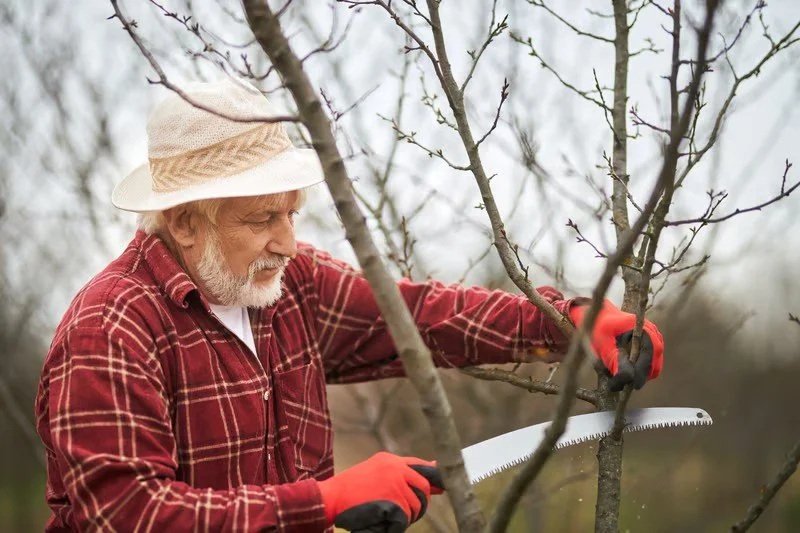
Barberry thorns are single or triple-spined, needle-sharp, and positioned at every leaf node — there is no safe angle of approach without gloves. Heavy leather gauntlet-style gloves extending past the wrist are essential. Use loppers rather than hand pruners whenever possible to keep your hands farther from the thorns. A pruning saw for hard renovation. Gather clippings on a tarp and bag for trash — barberry clippings don't belong in compost where thorns persist and seeds may germinate.
Common Varieties and Their Sprawl
The labeled size is the starting point — not the finish line
Every variety in this table produces viable red berries that birds disperse into the surrounding landscape. The burgundy-leaved selections are somewhat less vigorous seeders than the green species form, but none are sterile. "Labeled size" reflects nursery marketing; "actual behavior" reflects what the plant does when it meets real soil and no annual containment. The gap between the two is the pruning commitment barberry demands.
| Variety | Labeled Size | Actual Behavior |
|---|---|---|
| 'Crimson Pygmy' | 2 ft × 3 ft | Reaches 3-4 ft wide through layering; most common on Seacoast properties |
| 'Rose Glow' | 5-6 ft × 4-5 ft | Pink-splashed burgundy; vigorous; overwhelms foundations quickly |
| 'Gold Nugget' | 2-3 ft × 2-3 ft | Chartreuse-gold foliage; slower than burgundy types but still spreads |
| 'Concorde' | 2 ft × 3-4 ft | Deep purple, very compact; least aggressive of burgundy varieties |
| 'Helmond Pillar' | 4-5 ft × 2 ft | Columnar form; less lateral spread but still seeds aggressively |
| Green species | 4-6 ft × 4-7 ft | Largest, most vigorous; found on older properties; most invasive |
Native Replacements: Deer-Resistant Without Thorns
The qualities that made barberry popular exist in plants that stay where you put them
| Native Alternative | Size | Why It Works |
|---|---|---|
| Bayberry (Myrica pensylvanica) | 5-8 ft × 5-8 ft | Semi-evergreen; aromatic; deer-resistant; thrives in salt, sand, wind |
| Inkberry Holly (Ilex glabra) | 5-8 ft × 5-8 ft | Evergreen; tolerates wet; deer-resistant; native hedge substitute |
| Sweetfern (Comptonia peregrina) | 2-4 ft × 4-6 ft | Aromatic native groundcover-shrub; deer-proof; sandy soil specialist |
| Ninebark ‘Little Devil’ | 3-4 ft × 3-4 ft | Burgundy foliage like Crimson Pygmy; native; no thorns; no invasive seed |
| Virginia Sweetspire ‘Little Henry’ | 2-3 ft × 3-4 ft | Compact; fragrant white flowers; brilliant red fall color; deer-resistant |
Ninebark 'Little Devil' is the most direct replacement for 'Crimson Pygmy' — same compact size, same burgundy foliage, same full-sun preference, but native, non-invasive, and thornless. Virginia Sweetspire 'Little Henry' fits the same tight foundation positions and adds fragrant summer flowers plus fall color that barberry lacks. Bayberry and sweetfern are coastal specialists perfectly suited to the sandy, wind-exposed, salt-sprayed sites where barberry was often planted precisely because nothing else survived. All are deer-resistant, which was barberry's original selling point.
Containment and Transition FAQ
Managing the sprawl, deciding when to replace, and handling the thorns
-
Nothing went wrong — this is barberry doing what barberry does. The labeled size describes the central mound, not the arching stems that layer outward and root wherever they touch soil. Without annual perimeter pruning to sever those ground-layers and cut back the expanding edge, a 'Crimson Pygmy' colonizes six to twelve additional inches of bed space every year. The fix is either annual containment (sever layers, cut back edge, maintain a crisp boundary) or replacement with a genuinely compact native like ninebark 'Little Devil' that holds its space without constant policing.
-
Yes, but it requires annual commitment. March containment pruning (one-third reduction plus perimeter layer control), spring seedling patrol, and periodic interior thinning to maintain the arching form rather than a dense blob. Skip one year and you'll notice the expansion. Skip three and you'll be considering renovation or removal. Barberry rewards attentive maintenance with beautiful color and form — it just never stops testing the boundaries you set
-
Cut to ground level, then dig the root crown. Barberry's root system is fibrous and relatively shallow, making removal mechanically straightforward on plants under four feet — the thorns are the difficult part, not the roots. Wear gauntlet gloves and long sleeves. For large, established specimens, cut the top growth first, let the debris be cleared, then dig the crown with a mattock or spading fork. Bag all material with berries for trash disposal. Monitor the site for two seasons afterward — any root fragments left behind may resprout, and the seed bank in surrounding soil can produce new seedlings for two to three years after the parent plant is gone.
-
Japanese barberry (Berberis thunbergii) is banned for sale in New Hampshire (2024) and Massachusetts. Some nurseries may still carry remaining stock or mislabeled plants, and online retailers outside the region may ship to New Hampshire addresses. The ban applies to all cultivars including burgundy selections — 'Crimson Pygmy,' 'Rose Glow,' and every other B. thunbergii variety. Existing plants on your property are legal to keep but cannot be sold or shared. If you're planning new plantings, the native alternatives in this guide deliver comparable deer resistance and color without the legal or ecological complications.
Meet the Experts Behind Expert Pruning
Expert Pruning is led by a Master Gardener with over 25 years of horticultural experience serving New Hampshire's Seacoast and Southern Maine. Our team represents more than 100 combined years of expertise in horticulture, landscape design, and professional estate management. We follow a plant-first pruning philosophy—every cut prioritizes the plant's health, structure, and long-term vitality. Thoughtful, precise pruning keeps your landscape beautiful, resilient, and true to its natural form.
Beautiful Color That Stays Where You Plant It
Whether you need to contain the barberry you have, plan its removal, or choose the deer-resistant native replacement that delivers the same burgundy without the boundary wars, we can help.
Contact Us