

Beautyberry Pruning Guide
The one shrub you prune for berries, not blooms — and the annual reset that makes the purple happen
The Berry Is the Entire Point
No other shrub in the Seacoast landscape produces this color in October
American beautyberry (Callicarpa americana) and its Asian relatives (C. dichotoma, C. bodinieri) earn their place in the garden on the strength of a single, unrepeatable trick: clusters of iridescent magenta-purple berries wrapping the stems in tight bands from September through November, glowing against bare or yellowing foliage in a color nothing else in the landscape matches. The berries are the ornamental event. The small pink-lavender summer flowers that produce them are modest, the foliage unremarkable, and the winter silhouette forgettable. Everything about beautyberry pruning serves one goal — maximizing the fall berry display.
Here's the biology that drives the system: beautyberry flowers and fruits on new wood, current-season growth. Berries form in the leaf axils along the length of vigorous first-year stems. The longer and more numerous those stems, the more berry clusters the plant carries. Old wood — second-year stems and older — produces progressively fewer berries on shorter, weaker laterals. A beautyberry allowed to accumulate old wood over several years becomes a tall, leggy framework with sparse fruit scattered at the tips. The solution is counterintuitive but absolute: cut the entire plant to near ground level every March, and the flush of long, vigorous new stems that follows produces the heaviest berry crop the plant is capable of carrying.
Need an experienced hand with your beautyberry? Call Expert Pruning at (603) 999-7470.
Our Master Gardener-led team treats beautyberry as a cut-and-regrow system — the annual stump cut isn't aggressive pruning, it's the standard operating protocol that the plant's biology demands for its best performance.
The Annual Stump Cut
Twelve inches in March — every year, no exceptions
♦ The Cut (March, Before Growth Begins)
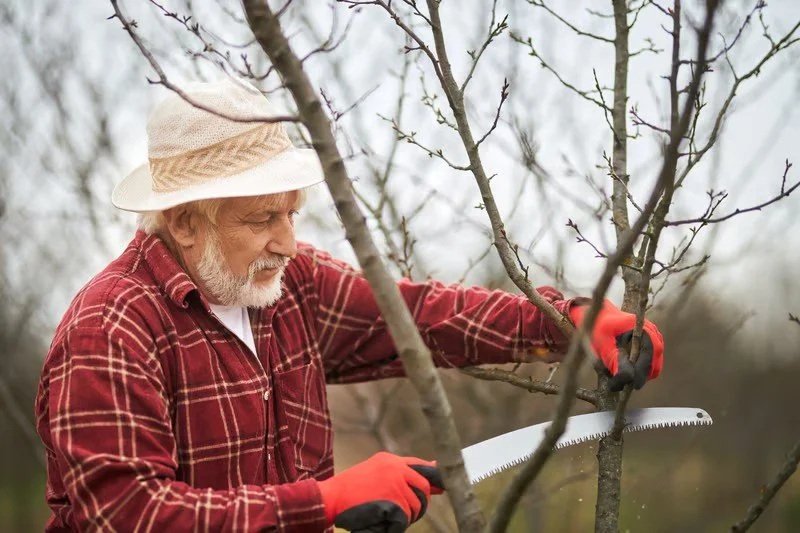
Step 1: Cut every stem to 6-12 inches above ground with loppers or a pruning saw. No selection required — remove all top growth uniformly. The plant will look like a cluster of short stubs. This is correct.
Step 2: Clean up all cut material. Beautyberry stems are soft-wooded and break down quickly in compost. Any berries still clinging from the previous fall can go in the compost pile without concern — beautyberry is not invasive in New England and doesn't self-seed aggressively in this climate.
Step 3: Mulch 2-3 inches around the crown. Water deeply if spring is dry. Do not fertilize — beautyberry grows vigorously on lean soil and excessive nitrogen pushes vegetative growth at the expense of berry set.
♦ What Happens Next
New shoots emerge from the crown and remaining stubs by late April. By June the plant has regrown to 3-4 feet of arching stems — essentially rebuilding its entire above-ground structure in three months. Small pink-lavender flowers appear in the leaf axils along the length of these new stems from June through July. By September, those flowers have become tight clusters of iridescent purple berries wrapping every stem at every leaf node. The display peaks in October as leaves yellow and drop, leaving the berries fully exposed on bare purple-brown stems — the signature look that makes beautyberry worth growing.
An unpruned beautyberry carries berries only at the tips of weak lateral shoots on old wood. A stump-cut beautyberry carries berries along the entire length of every stem from eighteen inches above the ground to the tips. The difference in display is dramatic — not incremental, but transformative.
🛠️ Why Not Selective Pruning?
Other new-wood shrubs (ninebark, spirea) benefit from selective renewal — removing the oldest third while preserving younger stems. Beautyberry doesn't respond the same way. First-year stems produce vastly more berries than second-year stems, and the difference is so stark that keeping any old wood is a net loss to the display. The stump cut isn't the aggressive option — it's the only option that produces the berry density beautyberry is capable of. Think of it as treating the plant like a herbaceous perennial that happens to be woody.
Tools: Loppers handle all annual work — beautyberry stems rarely exceed 1 inch diameter at the base. Hand pruners for any thin stems. No pruning saw needed unless the plant was left uncut for several years and developed thick old wood.
Hardiness and the Seacoast Margin
Beautyberry lives at its cold limit here — and that actually helps
American beautyberry (C. americana) is reliably hardy to Zone 6 and marginal in colder pockets of Zone 5. The Asian species C. dichotoma (purple beautyberry) and C. bodinieri var. giraldii 'Profusion' are hardier, surviving reliably through Zone 5 and performing well throughout the Seacoast. In severe winters, top growth may die back to the crown regardless of pruning — which means the plant effectively stump-cuts itself. This is not a problem. Because the annual management protocol is already a complete stump cut, winter dieback simply does the work for you. The crown and root system survive, new stems emerge in spring, and the berry cycle proceeds on schedule.
Siting matters more here than on tougher shrubs. Give beautyberry a sheltered position with full to partial sun (6+ hours for heaviest berry set, but 4 hours produces a respectable crop), protection from the worst northwest winter wind, and well-drained soil. A south- or east-facing position near a building provides the warmth and shelter that keeps the crown alive through January cold snaps. Avoid exposed, wind-blasted coastal frontage — bayberry and rosa rugosa handle that, beautyberry doesn't.
Species and Varieties for the Seacoast
Choosing between American, Asian, and white-fruited forms
| Species / Variety | Size (After Stump Cut) | Berry Color & Notes |
|---|---|---|
| C. americana | 4-6 ft regrowth | Magenta-purple; largest berries; native; Zone 6+ (marginal in cold pockets) |
| C. americana 'Lactea' | 4-6 ft regrowth | White berries; striking contrast with purple forms; same culture |
| C. dichotoma | 3-4 ft regrowth | Purple; smaller berries, very dense clusters; hardiest species (Zone 5) |
| C. dichotoma 'Issai' | 3-4 ft regrowth | Purple; self-fertile; heavy berry set from single plant; compact |
| C. bodinieri 'Profusion' | 4-5 ft regrowth | Violet-purple; abundant fruit; vigorous; reliable Zone 5-6 |
For most Seacoast properties, C. dichotoma 'Issai' offers the best combination of cold hardiness, compact regrowth, and heavy self-fertile berry set — it doesn't need a second plant for cross-pollination. C. americana produces the largest, showiest berries but needs the warmest microclimate you can provide. Planting one purple and one white form ('Lactea') together creates a striking October combination that stops visitors mid-stride.
Berry Production FAQ
Maximizing the purple, understanding the dieback, and siting for success
-
Wait until the berries drop or the birds take them (November-December), then enjoy the display for what it is. Next March, do the full stump cut to 6-12 inches. The following fall you'll see the difference — berries clustered at every leaf node along the entire length of every stem rather than scattered at the tips of old laterals. One skipped year is easily corrected. Multiple skipped years create a tall woody framework that still responds well to a hard stump cut; it just takes the full growing season to rebuild the arching structure.
-
Almost certainly not. Wait until late May before making any decisions — beautyberry breaks dormancy later than most shrubs, and the crown may take three to four weeks longer than neighboring plants to show new growth. Scratch the bark near the base: green underneath means alive. Even if all above-ground stems are dead, new shoots typically emerge from the root crown once soil temperatures warm. Since the annual protocol is a stump cut anyway, winter dieback costs you nothing except the need to clean up dead stems in spring. The berry display that fall will be identical to a plant that was cut deliberately.
-
C. dichotoma 'Issai' is self-fertile and produces heavy berry crops from a single plant — the best choice if you have room for only one. Other beautyberry species and varieties set more fruit with a cross-pollination partner nearby (within 20-30 feet). Planting two or three in a loose group dramatically increases berry density on all plants. This is also the arrangement that looks best in the landscape — a single beautyberry is a nice accent, but a cluster of three creates the massed purple display that makes people pull over.
-
No. Beautyberry is not invasive in New England and is not banned in any northeastern state. American beautyberry (C. americana) is native to the southeastern United States. The Asian species are well-behaved garden plants in this climate — they don't self-seed aggressively, don't sucker, and don't layer. Birds eat the berries (which is part of their ecological value) but seedlings rarely appear on Seacoast properties. You may find an occasional volunteer near the parent plant; pull it or transplant it. This is a shrub you contain through the annual stump cut, not through invasive management.
Meet the Experts Behind Expert Pruning
Expert Pruning is led by a Master Gardener with over 25 years of horticultural experience serving New Hampshire's Seacoast and Southern Maine. Our team represents more than 100 combined years of expertise in horticulture, landscape design, and professional estate management. We follow a plant-first pruning philosophy—every cut prioritizes the plant's health, structure, and long-term vitality. Thoughtful, precise pruning keeps your landscape beautiful, resilient, and true to its natural form.
October Purple That Stops You Mid-Stride
Whether you need your beautyberry stump-cut this March, want help siting new plants for the warmest microclimate on your property, or just want someone who understands that this shrub runs on a different system than everything else in the bed, we're here.
Contact Us