

Elderberry Pruning Guide
The native edible that grows faster than you expect — and the aggressive cane renewal that keeps flowers and fruit coming
Beautiful, Edible, and Alarmingly Fast
Elderberry doesn't wait for you to make a plan
American elderberry (Sambucus canadensis) is one of the most productive native shrubs you can plant — broad, flat-topped clusters of creamy white flowers in June and July followed by heavy drooping clusters of dark purple-black berries in August and September, prized for syrup, wine, jam, and immune-boosting preparations. The flowers themselves are edible and make exceptional fritters and cordials. Birds flock to the fruit. Pollinators cover the flowers. It's native from Maine to Florida, deer-resistant, wet-tolerant, and hardy well through Zone 3.
It's also one of the fastest-growing shrubs in the New England landscape. A new elderberry cane can push six to ten feet of growth in a single season, and an unpruned plant becomes a sprawling, top-heavy mass at 8-12 feet within three years. The soft, pithy wood breaks easily under the weight of heavy fruit clusters or in moderate wind. Without aggressive annual pruning, elderberry quickly transitions from productive garden plant to unkempt thicket — still producing fruit, but buried in a tangle of dead wood, broken stems, and floppy new growth that's nearly impossible to harvest from.
Need an experienced hand with your elderberry? Call Expert Pruning at (603) 999-7470.
Our Master Gardener-led team manages elderberry through the aggressive renewal cycle that keeps it productive, manageable, and attractive — a composed garden plant rather than a wild thicket that's taken over the back fence.
How Elderberry Fruits — and Why Age Matters
Second-year and third-year canes carry the harvest
Elderberry flowers and fruits on second-year and third-year wood. First-year canes grow vigorously but produce only leaves — no flowers, no fruit. In their second year, those canes develop lateral branches that carry the flat-topped flower clusters (cymes) that become the berry crop. Third-year canes continue to fruit on laterals but with declining vigor. By year four, a cane is thick, woody, often partially dead at the tips, and producing far less than the younger stems around it. The soft, pithy interior weakens structurally with age, making old canes prone to snapping in wind or under fruit load.
The pruning logic follows directly: maintain a framework of first-year (growing), second-year (fruiting), and third-year (still fruiting) canes, and remove everything older. This is more aggressive than the one-sixth blueberry cycle or the one-third renewal used on most deciduous shrubs — elderberry's rapid growth rate and short productive window demand a faster rotation.
The Annual Pruning Protocol (March)
Aggressive renewal on new wood — this is not a plant you under-prune
♦ Step 1: Remove All Canes Older Than Three Years
Cut every cane thicker than about 1.5 inches at ground level. These are the fourth-year and older stems that have passed their productive window — gray-barked, often partially dead, structurally weak, and producing little fruit. On a neglected plant, this may be half or more of the total cane count. Remove them all. Elderberry replaces old wood so fast that aggressive removal is not a risk — it's the foundation of the system.
♦ Step 2: Thin to 8–12 Strong Canes
From the remaining first-, second-, and third-year stems, select the eight to twelve strongest and best-spaced canes. Remove any that are pencil-thin, damaged, crossing, or growing from the perimeter beyond the intended footprint. The goal is an open, upright structure where each cane has space for lateral branching and air circulation — not a dense thicket. Eight to twelve canes on a mature plant is a manageable, productive framework.
♦ Step 3: Head Back for Height Control
Reduce the tallest remaining canes to 5-6 feet, cutting to strong outward-facing laterals. This keeps the fruit within reach for harvest and prevents the top-heavy flopping that unheaded elderberry develops by midsummer. Each headed cane responds with lateral branching below the cut — these laterals carry the flower and fruit clusters. Keeping the framework at 5-6 feet means harvesting from the ground without ladders and a plant that holds its form through fruit-heavy August rather than collapsing outward.
♦ Step 4: Sucker Management
Elderberry suckers vigorously from underground runners, expanding the colony 12-18 inches per year on sandy Seacoast soils. Cut all suckers beyond the intended boundary at ground level and sever runners with a vertical spade cut along the bed edge. Suckers within the footprint that are strong and well-positioned can replace old canes you've removed — this is how the colony renews itself. Suckers that are weak, crowded, or in the wrong place get removed with the rest.
🛠️ Tools and Safety
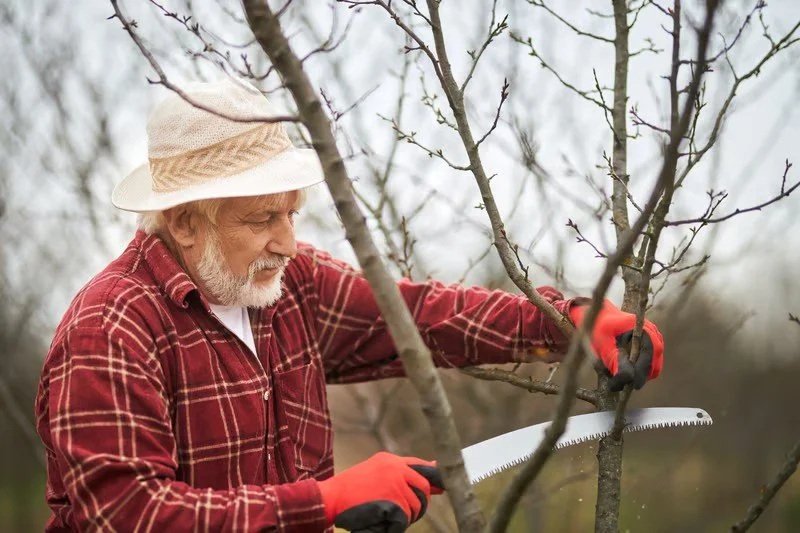
Loppers for most cane removal (1-2 inch diameter). Pruning saw for thick old trunks on neglected plants. Hand pruners for heading cuts, lateral thinning, and sucker removal. Sharp spade for perimeter runner containment. Elderberry wood is soft and pithy — it cuts easily, but old canes splinter rather than shear cleanly. Use sharp tools and watch for ragged cuts that should be cleaned up with a second pass.
Note: All parts of the elderberry plant except ripe cooked fruit and fully opened flowers contain cyanogenic glycosides. Raw berries cause nausea. Always cook elderberries before consuming. Stems, leaves, and roots are mildly toxic — wear gloves when handling large volumes of cut material and don't burn elderberry wood in cooking fires.
Varieties for the Seacoast
Edible producers and ornamental showpieces — different plants, different goals
| Variety | Size | Character & Notes |
|---|---|---|
| Edible Producers (S. canadensis) | ||
| 'Adams' | 6-10 ft × 6-8 ft | Heavy fruiter; large clusters; vigorous; the edible standard; plant with 'Johns' for cross-pollination |
| 'Johns' | 6-10 ft × 6-8 ft | Pollination partner for 'Adams'; large fruit; slightly later ripening; vigorous |
| 'York' | 6-8 ft × 6-8 ft | Largest berries of any American variety; heavy producer; late season; excellent flavor |
| 'Bob Gordon' | 6-10 ft × 6-8 ft | Heaviest yields in trials; large clusters; vigorous; newer selection; excellent for syrup |
| Ornamental (S. nigra) | ||
| 'Black Lace' | 6-8 ft × 6-8 ft | Deeply cut purple-black foliage; pink flowers; dramatic specimen; less hardy than American; modest fruit |
| 'Black Beauty' | 8-12 ft × 6-8 ft | Dark purple foliage (uncut leaves); pink flowers; vigorous; more upright than 'Black Lace' |
For fruit production, plant at least two American elderberry varieties within 20 feet for cross-pollination — 'Adams' and 'Johns' is the classic combination, 'Bob Gordon' and 'York' is the newer high-yield pairing. The ornamental European varieties ('Black Lace,' 'Black Beauty') are stunning foliage plants but less cold-hardy than American elderberry (marginal Zone 5, reliable Zone 6) and produce smaller, less abundant fruit. Prune ornamental varieties exactly the same way — the aggressive cane renewal system applies regardless of species. On Seacoast properties, 'Black Lace' benefits from a sheltered position out of the worst northwest winter wind.
Production and Management FAQ
Managing the speed and the sprawl
-
Yes — and this is often the best approach for badly neglected plants. Cut everything to 6-12 inches in March. Elderberry resprouts explosively from the crown and roots, pushing new canes that reach 5-6 feet by midsummer. You'll sacrifice that season's fruit (no second-year wood to flower on), but by the following March you'll have a fresh framework of strong first-year canes ready to enter their productive second year. Begin the standard annual protocol immediately and the plant produces a full crop in year two.
-
Two factors. First, elderberry's pithy wood is inherently soft — heavy fruit clusters create leverage that snaps older, weaker stems, especially in rain or wind. Annual removal of canes older than three years eliminates the most breakage-prone wood. Second, unheaded canes that reach 8-10 feet are top-heavy and have too much leverage for the soft stem to support. Heading to 5-6 feet in March keeps the fruit load at a height the canes can sustain. Some gardeners also install a simple wire or string support system at 4-foot height, tying the framework together to prevent outward flopping during fruit-heavy August. On windy Seacoast sites from Rye through North Hampton, staking is a practical addition.
-
Not in the regulatory sense — American elderberry is native and not listed as invasive in any New England state. But it is aggressively vigorous. It suckers freely, self-seeds where birds deposit berries, and colonizes rapidly on moist ground. It's best suited to semi-wild areas, back borders, and edible gardens with defined boundaries rather than tightly managed foundation beds where its vigor becomes a management burden. Treat it the way you'd treat sumac: wonderful in the right place, exhausting in the wrong one.
Meet the Experts Behind Expert Pruning
Expert Pruning is led by a Master Gardener with over 25 years of horticultural experience serving New Hampshire's Seacoast and Southern Maine. Our team represents more than 100 combined years of expertise in horticulture, landscape design, and professional estate management. We follow a plant-first pruning philosophy—every cut prioritizes the plant's health, structure, and long-term vitality. Thoughtful, precise pruning keeps your landscape beautiful, resilient, and true to its natural form.
Syrup-Worthy Harvests from a Plant That Behaves
Whether you need a neglected elderberry thicket renovated, a new edible planting designed with proper cross-pollination, or the annual cane renewal that keeps this vigorous native productive and contained, we manage the speed so you enjoy the harvest.
Contact Us