

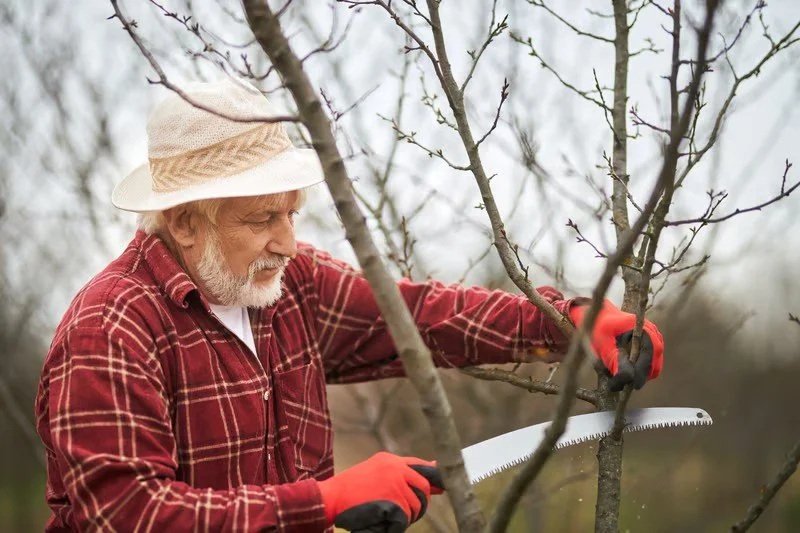
Rose of Sharon Pruning Guide
Establishing compact multi-stem framework through annual late-winter renewal
Preventing Vertical Legginess Through Structural Control
Annual framework renewal maintaining compact proportions
Rose of Sharon left unpruned develops characteristic tall leggy architecture—vigorous upright stems extending ten to fifteen feet with flowering concentrated on upper portions while lower framework becomes bare. This creates top-heavy appearance unsuitable for most landscape applications. The species blooms on new wood, generating flowers on current season's growth, which permits aggressive annual cutting without bloom sacrifice.
Late-winter pruning in March before growth begins establishes the structural framework that will carry summer flowering. Cutting stimulates vigorous basal growth and forces branching on retained stems, creating bushier compact form. The timing capitalizes on dormancy—plants respond to spring cutting with explosive compensatory growth.
I need an experienced hand to help with your rose of sharon, call Expert Pruning (603) 999-7470.
Understanding that new-wood flowering permits flexible intervention timing separates this species from old-wood bloomers requiring precise post-bloom windows. Rose of Sharon tolerates severe reduction—cutting to twelve to eighteen inches in late winter produces vigorous regrowth flowering prolifically by July.
Annual Late-Winter Framework Renewal
March cutting establishing compact multi-stem architecture
The standard maintenance approach removes one-half to two-thirds of previous season's growth each March, cutting back to strong outward-facing buds or lateral branches. This forces dense branching rather than vertical extension. Properties maintaining rose of sharon at four to six feet require annual cutting; specimens allowed to reach natural height need only occasional thinning.
Complete ground-level cutting—removing all growth to twelve to eighteen inches—represents the aggressive size control option. This produces uniform-height regrowth from the base. The technique suits foundation plantings requiring strict dimensional limits, though it sacrifices any multi-season woody framework development.
Late-Winter Renewal Protocol
Timing (March): Work before bud break while plant remains dormant. Avoid cutting during extreme cold—wait until temperatures moderate.
Standard reduction: Remove one-half to two-thirds of previous year's growth, cutting to outward-facing buds. Maintains established framework while controlling height.
Aggressive renewal: Cut all stems to 12-18 inches for complete size reset. Produces uniform bushy regrowth from base.
Deadheading: Optional during flowering. Removing spent blooms prevents prolific self-seeding.
Managing Prolific Self-Seeding
Preventing volunteer seedling proliferation
Rose of Sharon produces abundant seed capsules following bloom, each releasing numerous seeds that germinate readily. Within several years, properties develop dozens to hundreds of volunteer seedlings creating ongoing removal burden. The species shows invasive tendencies in some regions.
Deadheading spent flowers before seed capsule development prevents this proliferation. Remove faded blooms throughout the July-September flowering period. This labor-intensive approach proves most practical on compact specimens maintained through annual hard cutting.
Sterile cultivars offer permanent solution, producing showy blooms without viable seed. Varieties like 'Diana', 'Minerva', and 'Aphrodite' eliminate seeding concerns. Properties planning new installations should specify these sterile selections rather than traditional seed-producing types.
⚠️ Late Leafing-Out Character
Rose of Sharon remains bare well into spring, typically not showing leaf emergence until late May or early June—weeks after most deciduous shrubs have fully leafed. This creates concern among property owners fearing winter kill, often prompting premature removal of healthy specimens assumed dead. The species naturally delays spring growth regardless of winter conditions. Avoid early-season assessment decisions—wait until late June before concluding apparent deadwood is actually dead rather than simply dormant.
March
Late-winter pruning timing
50–67%
Standard annual reduction
July–Sept
Bloom period on new wood
Frequently Asked Questions
-
No—the species naturally develops tall leggy architecture reaching ten to fifteen feet without intervention. Maintaining compact dimensions requires annual late-winter cutting. Properties unwilling to commit to yearly March pruning should select naturally compact shrubs rather than fighting rose of sharon's vigorous vertical growth tendency.
-
No—rose of sharon blooms on current season's wood, generating flowers on stems produced during the growing season regardless of dormant-season cutting. March pruning stimulates vigorous spring growth that flowers prolifically by July. Even aggressive reduction to twelve inches produces flowering stems by mid-summer. This flexibility distinguishes new-wood bloomers from old-wood types requiring precise post-bloom timing.
-
Deadhead spent flowers before seed capsules mature, removing faded blooms throughout July-September. This prevents seed production eliminating future seedling emergence. For existing seedlings, hand-pull young volunteers or apply selective broadleaf herbicide to larger established seedlings. Long-term solution requires either consistent deadheading or replacement with sterile cultivars ('Diana', 'Minerva', 'Aphrodite').
-
Rose of Sharon naturally delays spring leafing until late May or early June, remaining completely bare weeks after other deciduous shrubs have fully leafed. This causes unnecessary concern and premature removal of healthy specimens. The species shows no leaf emergence until late spring regardless of winter conditions or plant health. Wait until late June before assessing apparent deadwood—scratch bark to check for green tissue indicating life. Most specimens showing no May growth will leaf out normally by mid-June.
Schedule Late-Winter Renewal
Professional rose of sharon framework pruning preventing legginess through annual March cutting. Expert Pruning serves coastal New England with new-wood bloomer expertise.
Contact Us