

Cytospora Canker on Spruce: How to Recognize It and Why Pruning Is the Only Cure
If you have a Colorado blue spruce or Norway spruce in your Exeter yard that has been slowly losing its lower branches over the past few seasons, Cytospora canker sits near the top of the list of likely causes. It's one of the most widespread and damaging diseases affecting spruce trees throughout the New Hampshire Seacoast, and it's also one of the most misunderstood. Homeowners often assume the browning is a watering problem, a soil issue, or simply the tree showing its age. Sometimes those factors genuinely are involved to some degree, but Cytospora is frequently the actual disease doing the damage underneath, and it will not stop on its own no matter what else gets corrected around it.
The difference between catching this early and letting it run its course is often the difference between losing a few branches and losing the whole tree, which is exactly why understanding the signs matters so much.
What Cytospora Canker Actually Is
Cytospora canker is a fungal disease caused primarily by Leucostoma kunzei on spruce. The fungus gains entry through wounds, cracks in the bark, pruning cuts, insect damage, and essentially any other opening it can exploit to get past the protective outer bark. Once inside, it colonizes the inner bark tissue and cuts off the flow of water and nutrients to whatever branch sits beyond the infection point. That branch then starves from the inside out while the fungus continues spreading further into the surrounding healthy tissue around it. By the time the damage becomes visible from the outside, in the form of browning needles or dead limbs, the disease has typically already been working inside the tree for some time, often longer than homeowners realize.
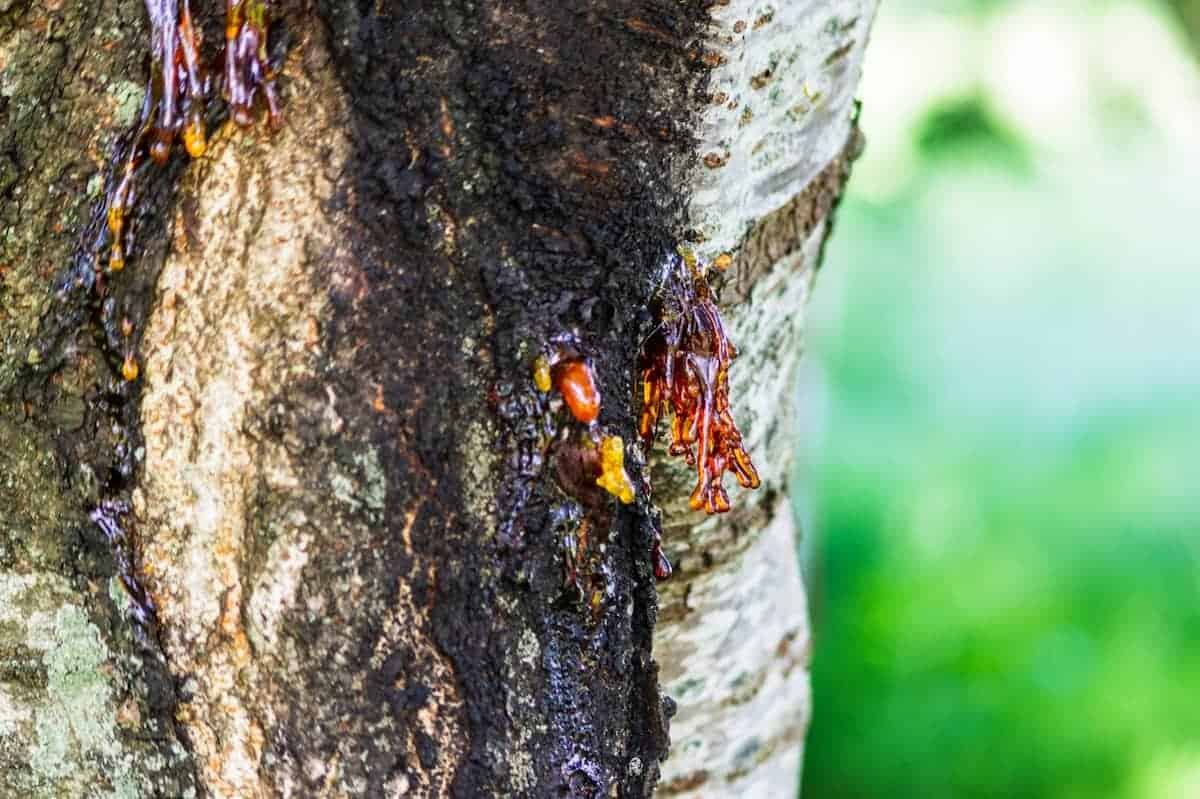
How to Identify It on Your Seacoast Spruce
May is one of the best months to look for Cytospora on the Seacoast, because the cankers are clearly visible before the new season's foliage fills in and obscures the branch structure. Look for these specific signs when you walk your property this spring.
The most recognizable symptom is resin flow, white or amber colored pitch weeping from a sunken, discolored area on a branch or along the main trunk. This resin often dries to a chalky white crust and can be seen from a distance on lower branches. The branch beyond the canker will be brown and dead, with needles that may stay attached for a season before dropping. Infected bark is often darker than surrounding tissue and feels slightly sunken when you press it. In severe cases, you may see small, pimple-like fruiting bodies embedded in the dead bark, which release spores during wet weather.
Why Cytospora Is Especially Problematic on the Seacoast
Our coastal soils, particularly the sandy, fast draining soils common throughout the Seacoast region, make drought stress a frequent reality for large conifers, even ones that look otherwise established and healthy. Cytospora is an opportunist by nature. It doesn't typically overwhelm a healthy, well watered tree with strong root development on its own, but the moment a spruce becomes stressed by drought, compacted soil, winter damage, or competition from nearby roots, it becomes significantly more vulnerable to infection taking hold. The combination of dry summers, salt laden coastal air, and the relatively shallow root zones common to many landscape spruces makes Seacoast trees particularly susceptible compared to spruces growing further inland.
Colorado blue spruce is especially prone to Cytospora, and a great many of the mature blue spruces planted throughout Seacoast neighborhoods back in the 1980s and 1990s are now showing significant canker damage across their lower thirds. This is genuinely worth knowing as context when you assess your own trees, since a blue spruce of that era showing lower branch dieback fits a very recognizable pattern we see across the region.
Why Fungicides Will Not Help
This is one of the most important things to understand about Cytospora canker, and it changes how a homeowner should respond once it's identified. Fungicide sprays simply do not work against an established infection. The disease lives inside the bark, fully protected from any surface treatment that could be applied from outside. Sprays cannot penetrate the canker tissue to reach the fungus directly, and they cannot reverse damage that's already occurred to the branch. Preventive sprays applied to still healthy tissue may carry some limited value in reducing the chance of new infections during wet spring weather, but they are not a cure, and they are not a substitute for actually pruning out infected wood. The only genuinely effective management tool once a canker has established itself is removing that infected wood entirely from the tree.
How to Prune Cytospora Canker Correctly
Timing and technique both matter here, and getting both right determines whether the pruning actually helps the tree or inadvertently spreads the problem further to healthy branches nearby.
Prune in dry weather whenever your schedule allows it. Cytospora spores spread through water specifically, so working during or right after rain meaningfully increases the risk of moving the disease to new sites on the same tree or onto nearby trees in the process.
Cut back to healthy wood, which means pruning the branch all the way back to the main trunk or to a lateral branch that shows absolutely no signs of discoloration or resin weeping. Resist the temptation to split the difference and leave a stub that includes any questionable tissue, since that leaves the infection a foothold to continue spreading from. If the infection sits on a main scaffold branch close to the trunk, make your cut just outside the branch collar and inspect the cut surface carefully for any staining or discoloration in the exposed wood. Clean, pale wood with no visible staining is what you're looking for to confirm you've cut past the infection entirely.
Sterilize your pruning tools between every single cut, without skipping this step. Isopropyl alcohol or a diluted bleach solution, wiped thoroughly across the blade before moving to the next branch, is the standard approach. This matters especially with Cytospora, because the spores are present throughout infected wood and transfer easily onto a contaminated blade, then directly into your next cut on the same tree.
Do not leave cut material lying on the ground beneath the tree once you're done. Remove and dispose of infected branches in the trash rather than adding them to a compost pile, since the fungus keeps producing spores in cut wood for some time even after it's removed from the tree itself.
The Best Window for Pruning Is Right Now
May is the ideal time to act on Cytospora for two distinct reasons. First, as covered above, the cankers are clearly visible before new growth obscures them later in the season. Second, and arguably more important, pruning before summer heat arrives reduces the compounding stress placed on the tree during recovery. Summer drought stress and heat are exactly the conditions that allow Cytospora to accelerate its spread through already weakened tissue. Removing infected wood in May gives the tree its best realistic chance to compartmentalize the wound and direct its energy toward healthy growth, rather than fighting an advancing infection while also dealing with peak summer stress at the same time.
Waiting until July or August to address visible cankers genuinely costs you ground. By then the disease has had three more months to spread through the tree, and the tree itself is entering its most physiologically stressful season of the year, the worst possible combination for recovery.
What Happens If You Do Nothing
Cytospora canker progresses steadily upward and inward through a tree if left unmanaged. Lower branches die and drop first, then the next tier up becomes infected in turn, and eventually the disease reaches main scaffold branches or begins tracking directly along the trunk itself. A tree that's developed cankers along the trunk rather than confined to individual branches is in serious trouble at that point, and it may not be recoverable through pruning alone anymore. Early intervention on the outer branches, while the pruning cuts involved are still manageable and the disease hasn't yet reached the central structure of the tree, is genuinely what saves these trees in the long run.
When to Consider Removal
Not every spruce with Cytospora is worth saving, and that's an honest assessment worth making rather than avoiding. If the disease has progressed to the point where more than half the canopy is affected, where cankers are visible on multiple main scaffold branches simultaneously, or where the tree has lost so much of its lower structure that it no longer serves its original purpose in the landscape, removal and replacement with a more disease resistant species or cultivar becomes a reasonable, and sometimes necessary, decision. A Norway spruce or a native white spruce will typically show meaningfully better long term resistance than a Colorado blue spruce does under our coastal conditions.
Protecting Your Remaining Healthy Spruces
The best long term strategy is keeping trees out of the stress conditions that invite Cytospora in to begin with. Deep, infrequent watering through summer dry spells, a ring of organic mulch maintained at two to three inches around the root zone, and avoiding mechanical damage from lawn equipment striking the base of the trunk all reduce vulnerability significantly over time. Avoid fertilizing a heavily infected tree with high nitrogen products, since pushing a flush of lush new growth on an already stressed plant can backfire and create more of the vulnerable tissue the fungus targets. The better approach is focusing on root zone health first and letting the tree's own defenses do the rest of the work.
Expert Pruning works with homeowners throughout Exeter and across the New Hampshire Seacoast and Southern Maine to assess, prune, and manage Cytospora canker and other tree health issues. If you're seeing resin weeping and branch dieback on your spruce this spring, the best time to act is now, before summer arrives and turns a manageable problem into a significantly harder one to solve.
Contact us to schedule an assessment.
info@expertpruning.com (603) 999-7470
