

How to Prune Rhododendrons After Bloom on the NH Seacoast
Few plants command a spring garden quite like a rhododendron in full bloom. The trusses are bold and generous, the evergreen foliage holds structure through all twelve months, and in a coastal garden the combination of glossy leaves and saturated flower color against a gray ocean sky is genuinely hard to beat. But once those blooms fade, usually sometime between late May and mid-June in our Zone 6b region, many homeowners in Stratham and throughout the Seacoast are left wondering what to do next and whether it is safe to prune now or better to wait.
The answer is yes, and the window that opens immediately after bloom is one of the most important and time-sensitive pruning opportunities of the entire gardening year. Rhododendrons set next year's flower buds relatively quickly after bloom, and pruning too late in the season removes those buds before they have a chance to develop. Understanding the biology behind the timing, and knowing exactly which cuts to make and which to avoid, is what separates a rhododendron that blooms abundantly year after year from one that disappoints.
Why Timing Is Everything With Rhododendrons
Rhododendrons bloom on old wood, meaning the flower buds you enjoyed this spring were formed during the growing season of the previous year. After bloom, the plant shifts its energy toward two simultaneous tasks: pushing new vegetative growth from the whorls just below the spent flower clusters, and beginning the process of forming next year's buds at the tips of those new shoots. This process begins in earnest by midsummer, which is why the post-bloom window for pruning is measured in weeks rather than months.
In the Stratham area and across the southern NH Seacoast, this window typically runs from the time the last petals fall through the end of June, with some flexibility into the first week of July depending on the season and the specific cultivar. Pruning within this window gives the plant the maximum amount of time to push new growth, ripen those shoots, and set flower buds before summer transitions into the shorter days of late August. Waiting until July or later is not catastrophic, but each week of delay incrementally reduces next year's bloom potential.
Deadheading: The First and Most Immediate Step
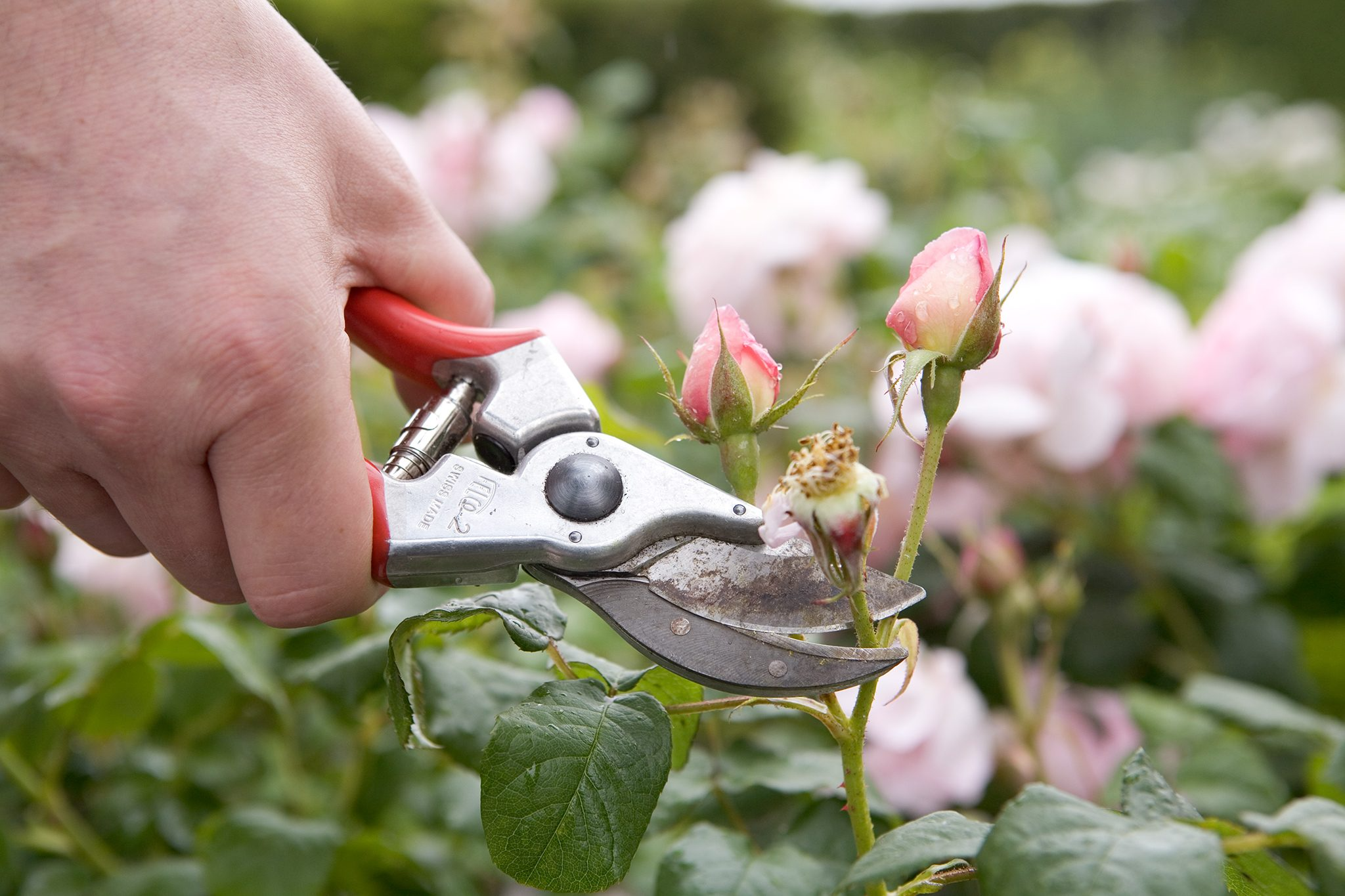
Before any shaping or size reduction, the first task after bloom is deadheading, removing the spent flower clusters from the tips of the branches. This is done by snapping or cutting the old truss cleanly at its base, just above the whorl of leaves or the visible growth buds beneath it. Deadheading redirects the plant's energy away from seed production and toward the vegetative growth that will carry next year's flowers, and on younger or recently planted rhododendrons it can make a meaningful difference in overall vigor and bloom performance.
Use your fingers to snap spent trusses off cleanly wherever possible, as this is often faster and less damaging to the emerging growth buds than working with pruners in a tight space. For larger, older trusses that do not snap cleanly, a pair of clean, sharp bypass pruners will do the job. Work carefully around the small, reddish growth buds clustered just below each truss, as these are the source of the new shoots you want to encourage and bruising or removing them sets the plant back unnecessarily.
Shaping and Size Reduction After Deadheading
Once deadheading is complete, step back and assess the overall shape of the plant. Rhododendrons pruned with an eye toward their natural form, a layered, slightly irregular silhouette rather than a sheared ball, always look more at home in a Seacoast garden than ones that have been mechanically trimmed into geometric shapes. Identify any branches that are crossing, growing inward, or extending significantly beyond the natural outline of the plant, and remove them with thinning cuts back to a lateral branch or to the main framework.
For size reduction, make cuts just above a healthy whorl of leaves or just above a visible latent bud on the stem. Rhododendrons will break from latent buds on older wood, but the response is more reliable and vigorous when cuts are made closer to existing foliage. Avoid cutting back into bare, leafless wood unless you are undertaking a deliberate multi-year renovation, and even then limit the reduction to no more than one-third of the plant's total size in a single season.
Renovation Pruning for Overgrown Specimens
Rhododendrons that have grown significantly too large for their space, or that have become leggy and open after years without pruning, can be renovated but the process requires patience and a multi-season commitment. Rather than cutting the entire plant back hard in a single spring, which risks removing all flowering wood and stressing the root system simultaneously, a staged approach removes the oldest and largest stems over three growing seasons. This method preserves some flowering capacity each year while steadily restoring a more compact, well-structured plant.
In coastal gardens where rhododendrons have been exposed to years of salt spray and winter wind, renovation pruning should always be paired with attentive aftercare. A generous layer of acidic mulch such as pine bark or shredded oak leaves applied after pruning helps retain moisture, moderate soil temperature, and gradually improve the soil chemistry that rhododendrons prefer. Deep watering through any dry spells in June and July supports the flush of new growth that follows pruning and gives the plant the best possible foundation for next year's bloom.
Trust Expert Pruning With Your Rhododendrons
Rhododendron pruning rewards precision, timing, and a steady hand, and it is one of the services our clients most frequently tell us they are grateful to have help with. At Expert Pruning, we work with rhododendrons and other spring-flowering shrubs throughout Stratham and the surrounding Seacoast communities, bringing the plant knowledge and seasonal awareness that these beautiful, long-lived specimens deserve. If your rhododendrons have outgrown their space or simply never seem to bloom as well as they should, we would be glad to take a look and put together a plan.
