

How to Prune Fruit Trees After Bloom for Healthier Crops
Here is a particular kind of satisfaction that comes from a well tended fruit tree in a New England garden. The blossoms arrive in May like a reward for surviving another Seacoast winter, and by August, a properly cared for apple or pear tree can be genuinely beautiful, structured, productive, and full of promise. But between those two moments, the work you do matters enormously. Post bloom pruning is one of the most impactful things a home gardener can do to improve fruit quality, tree health, and long term structure, and it is consistently one of the most misunderstood.
Many homeowners either skip this window entirely or wait until late summer when the opportunity has passed. Others prune too aggressively in early spring and remove the very flower buds they were hoping to harvest. Understanding when and how to prune fruit trees after bloom and why that timing matters in Zone 6b can completely change the trajectory of your harvest.
Why Post bloom Pruning Is Its Own Season
Most gardeners know that late winter or very early spring is the primary pruning window for fruit trees, when the structure is visible and the tree is fully dormant. But the weeks just after bloom, typically late May into June on the Seacoast, offer a second, equally valuable opportunity. At this stage, the tree has just committed enormous energy to flowering and the early development of fruit, and it is highly responsive to shaping.
Post bloom pruning allows you to remove water sprouts and vigorous upright shoots that emerged during the spring flush, thin out congested interior growth, and correct any structural issues that were hard to see before leaf out. It is also the moment to begin fruit thinning on apples, pears, and plums, a practice that most home gardeners overlook entirely but that has a direct and measurable effect on fruit size and flavor.
What to Remove and Why
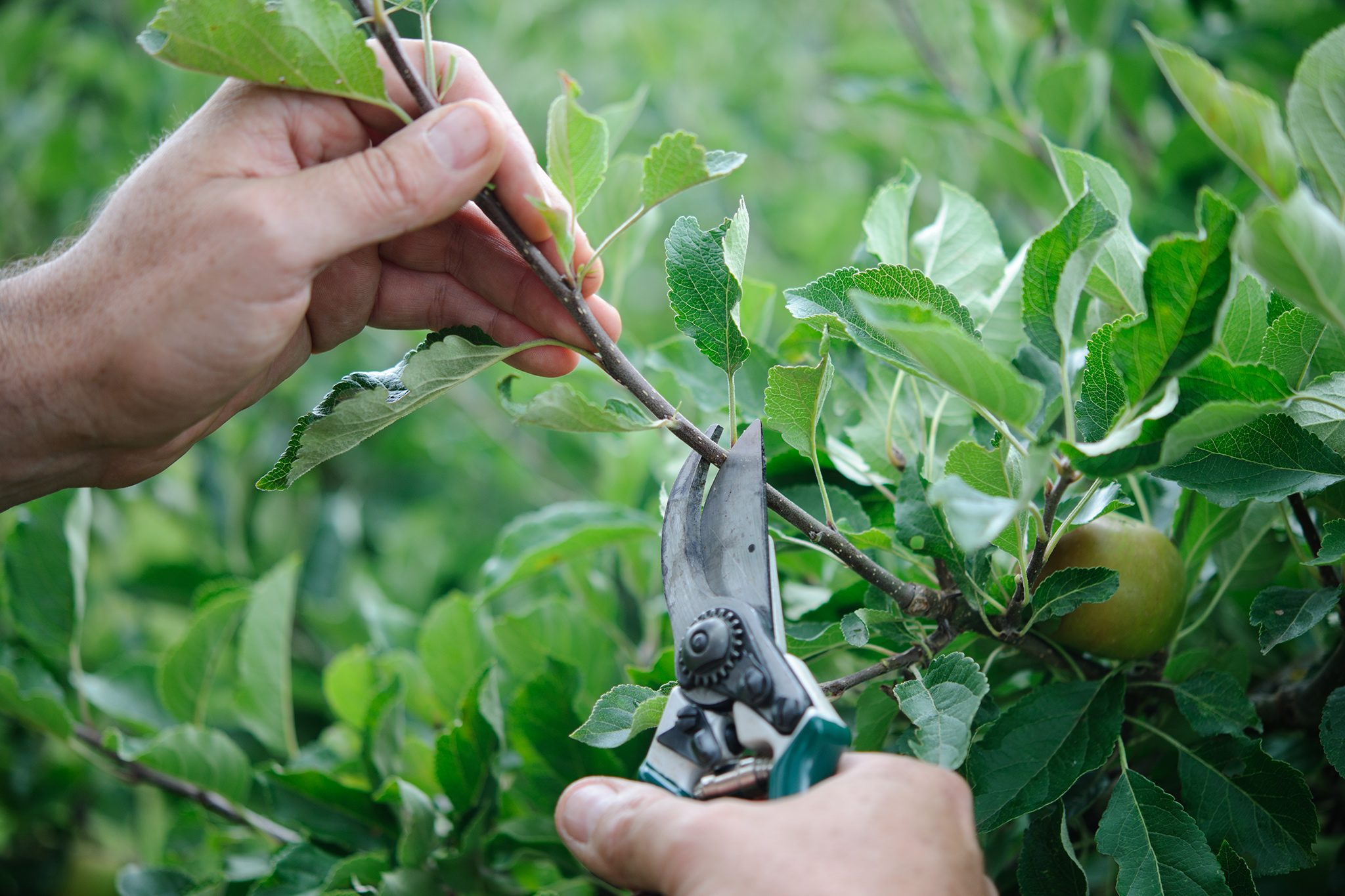
When you step back and look at a fruit tree after bloom, you are looking for four categories of growth to address. Water sprouts, those fast growing, perfectly vertical shoots that erupt from major branches, should be removed entirely, cut flush to the branch without leaving a stub. They drain energy, create congestion, and rarely produce fruit. Left unchecked, they take over the canopy within a season or two.
Next, look for any crossing or rubbing branches in the interior. In a Seacoast garden where wind is a constant presence, especially in exposed yards in Rye, New Castle, or along the Hampton Beach corridor, interior congestion creates friction points that wound bark and invite disease. Remove the weaker of any two crossing branches, cutting back to a clean lateral or branch collar. Your goal is a canopy with enough open space that light and air can move through it freely.
Finally, address any dead, damaged, or diseased wood you find, and remove it with clean, disinfected tools. Fire blight, a bacterial disease that affects apples and pears, is particularly active in our warm, humid early summers and spreads rapidly through pruning cuts if tools are not wiped between cuts with a diluted bleach solution or isopropyl alcohol.
Fruit Thinning Is Pruning Too
This step surprises many first time fruit growers: after the blossoms fall and tiny fruitlets begin to develop, the tree will naturally drop some of them in what is called the June drop. But for most home orchards, nature does not thin aggressively enough on its own. For apples and pears, aim to leave one fruit per cluster, spaced roughly six to eight inches apart along each branch. For plums, thin to about four inches between fruits.
It feels counterintuitive to remove small fruit from a tree you have been patiently tending since March. But the difference in your harvest is remarkable, larger, better colored fruit with more sugar and less disease pressure. A tree that is not overburdened also sets better flower buds for the following year, which is how you build a consistently productive home orchard over time.
Aftercare for Seacoast Soils
Once post bloom pruning is complete, take care of the ground beneath the tree as attentively as you did the canopy. Our sandy, fast draining soils in communities like Exeter, Stratham, and Greenland dry out quickly once June heat arrives, and consistent soil moisture during fruit development directly affects size and finish. Apply two to three inches of shredded wood chip mulch out to the drip line, keeping it clear of the trunk, and water deeply once or twice a week during dry spells rather than shallow daily irrigation.
Resist the urge to fertilize heavily after pruning. A light topdressing of compost is appropriate, but a surge of nitrogen in early summer pushes leafy vegetative growth at the expense of fruit quality and can make trees more susceptible to fire blight.
Let Expert Pruning Help Your Orchard Thrive
Fruit tree care requires a practiced eye and confidence in the cuts you are making. If your trees have gone a few seasons without attention, or if you are unsure whether what you are looking at is a water sprout, a fruiting spur, or a structural issue worth addressing, that is exactly the conversation we love to have. Expert Pruning works with home orchards and ornamental fruit trees throughout the Seacoast, in Portsmouth, Exeter, North Hampton, Rye, Kittery, and beyond, bringing the same careful, plant first approach to every visit.
Reach out this spring and let us take a look before the season gets away from you. A well pruned fruit tree is a long term investment, and with the right care at the right moment, yours can produce beautifully for decades to come.
