

Pruning Forsythia: Setting the Stage for a Better Spring Bloom
Pruning Forsythia: Setting the Stage for a Better Spring Bloom
Few sights signal spring on the Seacoast quite like a forsythia in full bloom. Those brilliant yellow flowers bursting open after a long winter are a genuine welcome sign that the growing season has finally begun. But the best displays don't just happen by chance. They're the direct result of smart, timely pruning carried out the previous year. Understanding when and how to prune your forsythia is what ensures next spring's bloom comes in abundant, balanced, and healthy rather than sparse or one-sided.
Getting to Know Forsythia
Forsythia is a fast growing, deciduous shrub beloved for its vivid early spring color, often the very first real burst of color anywhere in the landscape after winter. It thrives in the coastal climate of New Hampshire and southern Maine, where well drained soils and full sun bring out its best possible performance year after year. Left unchecked, though, forsythia can become genuinely unruly, sprawling well beyond its intended space or blooming unevenly across the plant, with flowers concentrated only where light happens to reach.
Because it flowers on old wood, branches that grew during the previous year, pruning at the right time is genuinely critical to getting a good display. Cutting at the wrong time removes the very buds that would have become next year's flowers, leaving you with a perfectly leafy green shrub come summer but disappointingly few blooms the following April.
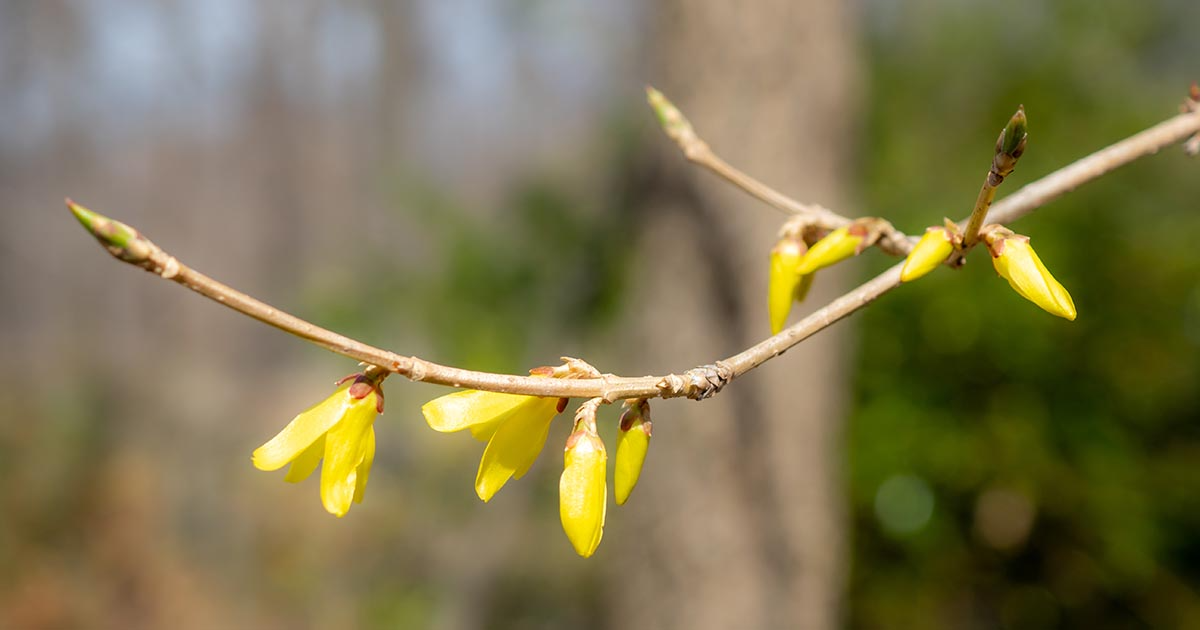
Forsythia branch with yellow spring flowers
The Right Time to Prune Forsythia
The ideal window for pruning forsythia on the Seacoast is immediately after it finishes flowering, typically in late April to early May. This gives the shrub plenty of time to produce new shoots that will form next year’s flower buds during summer.
If you prune too early, you’ll shorten the bloom period. If you prune too late — especially after midsummer — you risk removing developing buds. Timing is everything. For gardeners in Portsmouth, Rye, and North Hampton, this timing aligns perfectly with the shift from spring’s cool moisture to early summer warmth, when plants are actively growing and recovering quickly.
How to Prune for Structure and Health
Forsythia responds best to what's called rejuvenation pruning, removing roughly one third of the oldest stems all the way down to the ground each year rather than trimming the whole plant uniformly. This method keeps the plant genuinely young at a structural level, encourages vigorous new shoots to take over, and prevents the shrub from becoming woody, tangled, and unproductive over time the way it would under neglect.
Start by identifying the old, thick canes, typically darker brown in color and noticeably less productive than younger growth nearby. Cut these right down to the base using clean, sharp loppers or pruning shears, leaving no stub behind. Next, thin out any crowded areas of the plant to allow light and air to genuinely reach the center rather than just the outer canopy. Finally, shape the shrub naturally by trimming back any long, arching stems to an outward facing bud, working with the plant's natural form rather than against it. Avoid giving forsythia a flat, hedge-style trim under any circumstances, since that approach reduces bloom coverage significantly and weakens the plant's overall structure over time.
For large or overgrown shrubs, a common sight in older Portsmouth and Exeter gardens where forsythia has often been growing untouched for decades, rejuvenate in stages over two or three years rather than cutting everything back all at once. This more gradual approach reduces stress on the plant considerably while still restoring good shape and balance by the end of the process.
Encouraging More Blooms
Healthy, well-timed pruning leads directly to stronger shoots that go on to set more flowers the following spring. After pruning, applying a light layer of compost or a slow release, balanced fertilizer around the base of the shrub gives it a genuine boost heading into the growing season. In the sandy coastal soils common around Rye or Hampton, this step helps replenish nutrients and retain moisture that would otherwise drain away quickly.
Mulching is another genuinely valuable step in this process. A two to three inch layer of organic mulch, kept a few inches clear of the stems themselves, helps conserve moisture, suppress competing weeds, and protect the root system during the temperature swings that come with a Seacoast winter. Just be careful not to pile mulch directly against the base of the plant, since that practice traps moisture against the stems and can invite rot over time.
Common Mistakes to Avoid
One of the most frequent pruning mistakes we see is cutting forsythia in fall or winter rather than waiting for the proper post-bloom window. Since the flower buds have already formed by that point in the year, those cuts remove next spring's color entirely, often without the gardener realizing what's happened until the following April arrives with disappointingly little bloom.
Another common misstep is over-shearing, using hedge trimmers to flatten the plant into a rigid, geometric shape rather than letting it grow naturally. Forsythia's real beauty lies in its graceful, arching habit, and over-shearing doesn't just spoil that natural shape. It also causes dense outer growth that shades out the inner canes, which reduces overall flowering across the whole plant in a way that compounds year after year.
Finally, avoid removing all stems at once unless the shrub is genuinely severely overgrown and has stopped blooming altogether. In that specific situation, a hard rejuvenation prune down to about six inches in late winter can reset the plant entirely, but be prepared to skip an entire season of flowers while it recovers and rebuilds its structure from the ground up.
Forsythia and the Seacoast Climate
Forsythia genuinely thrives in the Seacoast's Zone 6b climate, where winters run cold enough to encourage proper dormancy but not so harsh that the dormant flower buds end up damaged in a typical year. The sandy, free draining soils common along the coast are excellent for root health overall, though supplemental watering during dry stretches in summer genuinely helps the plant perform at its best.
Because coastal winds can dry out soil quickly and stress new growth, maintaining good soil structure with regular compost and mulch applications becomes especially important here. Pruning itself also helps reduce wind resistance and prevents breakage in more exposed gardens, particularly closer to the shore in spots like Rye and Hampton where wind exposure runs higher than further inland.
For inland properties around Exeter and Stratham, where soils tend to hold more moisture than the sandier coastal sites, ensuring good drainage becomes the priority to prevent root issues down the line. Pruning after bloom also allows better air circulation through the canopy in general, which reduces the risk of fungal problems developing during the humid conditions that often arrive in late spring.
Combining Forsythia with Other Spring Bloomers
Forsythia's golden blooms make a genuinely striking backdrop for early spring bulbs like daffodils and alliums planted nearby. When pruned properly, its more open structure allows companion plants growing beneath it to receive good sunlight in early spring before the forsythia leafs out fully, then gentle shade later in summer once the canopy fills in. This layered approach works beautifully in mixed borders, creating real seasonal interest that carries from March all the way through June.
After pruning, consider underplanting the bed with low maintenance groundcovers such as vinca or creeping phlox, both of which thrive under the same general conditions forsythia prefers and help control weeds naturally without much additional effort.
Seacoast Conditions
Gardening along the Seacoast means adapting consistently to coastal winds, salty air, and genuinely fluctuating moisture levels throughout the year. Pruning is one of the most effective tools available for helping shrubs like forsythia stay resilient under these specific conditions. A well pruned forsythia doesn't just bloom more reliably from year to year. It also maintains a meaningfully stronger overall framework that withstands weather challenges better across multiple seasons.
Whether your garden overlooks the ocean in Rye or sits further inland in Exeter, regular pruning combined with thoughtful seasonal care keeps your forsythia glowing reliably each spring rather than producing an inconsistent display from year to year.
Trust the Local Experts
At Expert Pruning, we understand how timing, technique, and local conditions shape plant health across the region. Our fine gardening and pruning services are designed specifically for the unique climate and soils of the Seacoast region, from Portsmouth and Rye through Hampton and Exeter.
If your forsythia needs shaping or rejuvenation, or if you'd like professional help preparing your garden for next spring's display, reach out to Expert Pruning. Together, we'll make sure your landscape looks its best year after year.
Contact Information:
📧 info@expertpruning.com
📞 (603) 999-7470
