

How to Prune Forsythia for Bigger BloomsExpert Pruning
How to Prune Forsythia for Bigger Blooms
There is nothing quite like forsythia in early spring. Along the Seacoast of New Hampshire, those bright yellow branches light up neighborhoods in Portsmouth, Rye, Exeter, and North Hampton before most trees have even leafed out. In Zone 6b, forsythia is often the first bold signal that winter has finally loosened its grip. When pruned correctly, it becomes even more spectacular year after year.
As a Master Gardener, I often tell homeowners that bigger blooms are not about feeding more or watering more. They are about timing and technique. Forsythia blooms on old wood, which means the flower buds form on last year’s growth. Understanding that simple fact makes all the difference in how and when you prune.
Why Timing Matters for Bigger Blooms
If you prune forsythia in late winter or early March, you will remove most of the flower buds. The shrub will still grow, but the show will be disappointing. Here along the Seacoast, the right time to prune is just after flowering, typically in late April or early May depending on how quickly spring warms up.
In coastal towns like Rye and Portsmouth, the ocean can slow early spring temperatures slightly. Inland areas such as Exeter may warm a bit faster. Watching the blooms is your best guide. Once the yellow flowers begin to fade and green leaves start to appear, it is time to step in with your pruners.
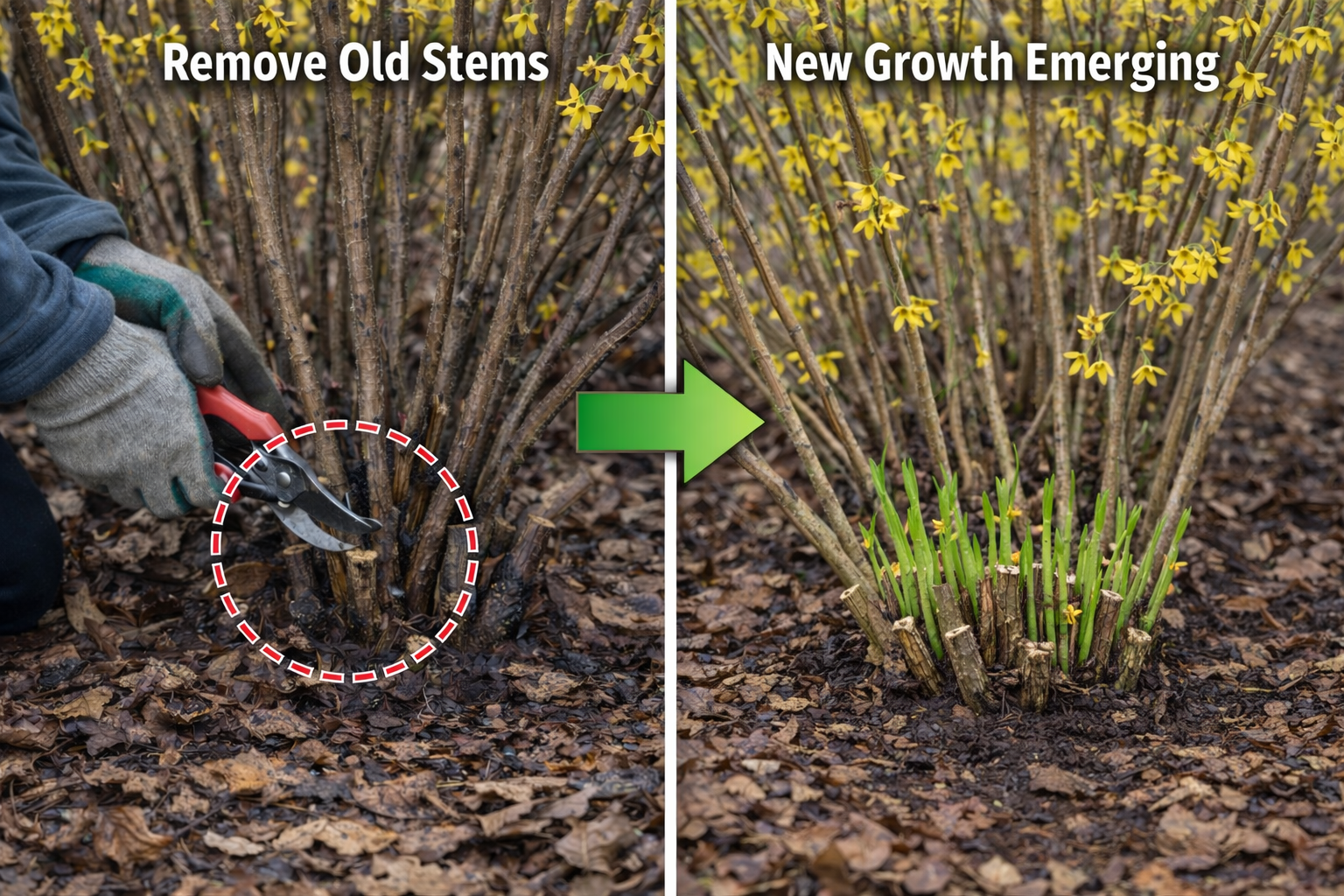
Step One: Remove the Oldest Stems
Forsythia responds beautifully to renewal pruning. Each year, remove about one third of the oldest, thickest stems all the way down to the base. These older canes are usually darker, woodier, and less productive.
Cutting them at ground level encourages fresh, vigorous shoots to rise from the crown. Those new stems will carry next year’s blooms. This method keeps the shrub youthful and prevents it from becoming a tangled, top heavy mass.
In many Seacoast gardens, I see forsythia that has been sheared into tight balls. Shearing creates a dense outer shell of growth and very little flowering inside. Renewal pruning, by contrast, opens the plant and promotes larger, more abundant blooms.
Step Two: Shape, Do Not Shear
After removing the oldest stems, lightly shape the remaining branches. Focus on maintaining the shrub’s natural arching form. Forsythia is meant to be graceful and slightly wild, not clipped into rigid geometry.
Trim back overly long shoots to a strong outward facing bud. This encourages growth that spreads outward rather than inward. Good airflow is especially important in the humid summers of Southern Maine and coastal New Hampshire, where dense shrubs can trap moisture and invite disease.
Step Three: Thin for Light and Air
Forsythia thrives in full sun, which is key to producing bigger blooms. If nearby ornamental trees or overgrown shrubs are casting heavy shade, selective pruning can improve light penetration. In established landscapes across North Hampton and Exeter, thinning surrounding growth can dramatically increase flowering.
Within the shrub itself, remove crossing or rubbing branches. Open structure allows sunlight to reach interior stems. More light means stronger bud formation for the following spring.
Caring for the Soil Beneath
Pruning alone will not guarantee spectacular blooms. Healthy soil plays an essential role. Along the Seacoast, soils range from sandy and fast draining near the coast to heavier and more compacted inland.
After pruning, clear away weeds from the base of the shrub. Apply a layer of organic mulch two to three inches deep, keeping it a few inches away from the stems. Mulching helps regulate soil temperature, conserve moisture, and gradually improve soil structure.
In sandy soils, mulch reduces moisture stress during dry summer spells. In heavier soils, it prevents surface compaction and improves drainage. Good shrub care is always about supporting both what is above ground and what lies beneath.
Managing Overgrown Forsythia
Sometimes homeowners call us in Portsmouth or Rye because their forsythia has outgrown its space entirely. When a shrub has been neglected for years, it may be best to perform a more dramatic rejuvenation.
In severe cases, the entire shrub can be cut back to about six to twelve inches from the ground immediately after flowering. This may sacrifice one season of full bloom, but it resets the structure. Within a year or two, the plant often returns stronger and more balanced.
This kind of work requires careful judgment. Cutting too late in the season can interfere with bud formation. That is why professional pruning services are often the safest route for mature, valuable shrubs.
Integrating Forsythia Into a Broader Landscape Plan
Forsythia is often one piece of a larger ornamental landscape. When paired with thoughtful pruning of nearby shrubs and ornamental trees, the overall effect is much more harmonious. Spring is also the time to evaluate spacing, airflow, and long term structure.
Weeding and mulching beds around forsythia creates a clean visual frame for those brilliant yellow blooms. Edging and seasonal garden maintenance further enhance curb appeal. In towns like Exeter and North Hampton, where many properties feature mixed borders, coordinated shrub care elevates the entire landscape.
A Local Perspective From Zone 6b
In Zone 6b, we deal with fluctuating winters and occasional late frosts. Forsythia is resilient, but heavy snow loads can bend or crack stems. Early spring is a good time to inspect for winter damage and remove any broken wood.
Because our growing season is relatively short compared to southern climates, every bloom matters. By pruning at the correct time and encouraging strong new growth, you maximize the display within that window. It is a small shift in technique that yields dramatic results.
A Gentle Word of Advice
If you are unsure about where to cut or how much to remove, start conservatively. You can always take more off, but you cannot put it back. Clean, sharp tools and thoughtful timing are your best allies.
Forsythia rewards attention and consistency. With the right approach, those bright yellow branches will return each spring fuller and more vibrant than before.
Partner With a Local Pruning Expert
At Expert Pruning, we provide professional pruning, shrub care, ornamental tree maintenance, weeding, and mulching throughout Portsmouth, Rye, Exeter, North Hampton, and across the Seacoast of New Hampshire and Southern Maine. Our work is rooted in an understanding of local soils, climate, and the specific needs of Zone 6b gardens.
If you would like bigger blooms and a healthier, longer lived forsythia, we are here to help. Thoughtful, well timed pruning is an investment in your landscape’s future. Let Expert Pruning guide your shrubs toward their brightest spring yet.
Reach out to schedule a consultation or ask a question about your garden.
📧 info@expertpruning.com
📞 (603) 999-7470
