

Seasonal Transition: Combining Pruning With Mulching in June in Exeter, NH
Seasonal Transition: Combining Pruning With Mulching in June
There is a particular quality to the garden in early June that experienced gardeners learn to read carefully. The urgency of spring has settled, the first flush of bloom is winding down, and the plants are shifting into their long summer mode of steady growth and ripening. This transition moment is brief, and it is one of the most useful windows of the entire gardening year.
In Exeter and across the New Hampshire Seacoast, June is when two of the most impactful seasonal tasks converge: the tail end of the spring pruning window and the ideal timing for summer mulching. Done together and in the right order, these two practices reinforce each other in ways that benefit your plants for months.
Why June Pruning Still Makes Sense
By the time June arrives, most of the structural pruning work belongs in the rearview mirror. Late winter and early spring are the right moments for major cuts on most woody plants. But June pruning is not about structure. It is about refinement, timing, and catching what you missed.
Spring blooming shrubs, including lilacs, forsythia, weigela, and azaleas, should be pruned now, right after their flowers fade. These plants set next year's flower buds on the wood they grow this summer. Every week you wait past bloom is another week of new growth forming, and cutting into that growth in July or August means sacrificing next spring's display. June is the last responsible window, and in Zone 6b it closes faster than gardeners expect.
This is also a good moment to tip back any shrubs that pushed aggressive spring growth and are beginning to crowd their neighbors or lose their shape. Light shaping cuts now, made to an outward facing bud or a lateral branch, redirect energy cleanly without triggering the heavy regrowth response you would see from harder cuts earlier in the season.
Ornamental trees that bloomed in spring, serviceberry, redbud, and ornamental cherry among them, can receive light corrective work this month as well. Focus on crossing branches, awkward laterals, and any water sprouts that emerged from the base or main scaffold. Keep removal conservative, no more than 15 to 20 percent of the canopy, and use thinning cuts rather than heading cuts wherever possible.
The Case for Mulching Immediately After
Here is the part that most homeowners overlook. Pruning and mulching are almost always treated as separate tasks on separate days, but combining them in sequence produces results that neither accomplishes alone.
When you prune, you remove foliage and wood that was shading the soil. Even modest pruning opens the canopy slightly and exposes the root zone to more direct sun and evaporation. In our Seacoast soils, which tend toward the sandy and fast draining, that exposure matters. Moisture loss accelerates quickly on warm June days, and freshly pruned plants are already managing a mild stress response from the cuts themselves.
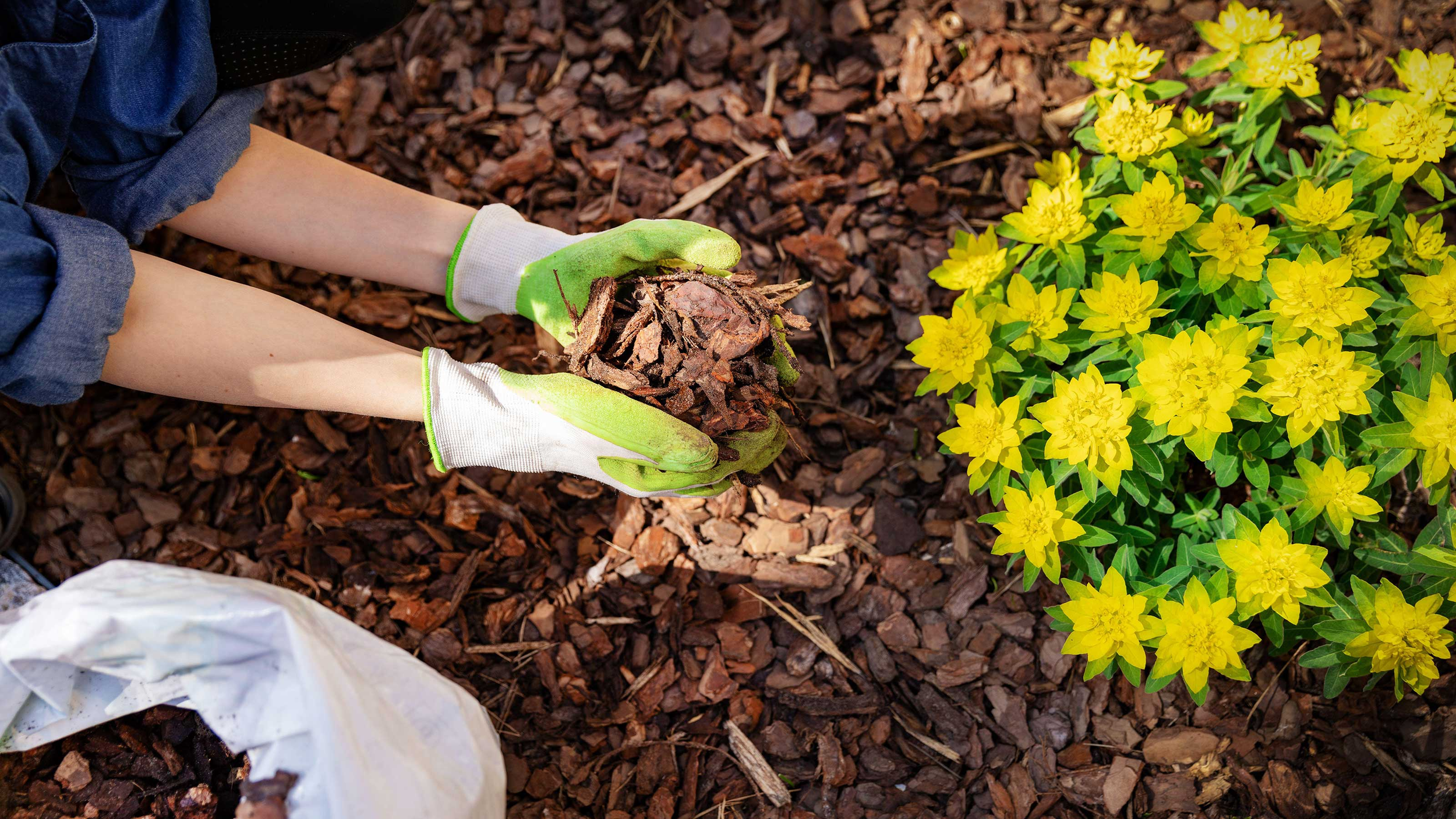
Mulching immediately after pruning addresses that stress directly. A two to three inch layer of quality organic mulch, applied right after you finish cutting, stabilizes soil temperature, slows evaporation, and gives the plant a supportive environment in which to begin sealing its wounds and pushing new growth. It is a small sequencing shift that delivers a meaningful benefit.
Keep mulch several inches away from the base of shrub stems and tree trunks. Mulch piled against bark traps moisture, encourages rot, and creates habitat for insects and rodents. A clean ring of exposed soil at the base of each plant, with mulch extending outward to the drip line, is the correct application.
What to Use and How Much
Not all mulch is equal, and on the Seacoast this distinction matters. Shredded bark and wood chip mulches are excellent choices for shrub beds and ornamental tree rings. They break down moderately, feed the soil over time, and stay in place reasonably well in coastal wind. Finely shredded material breaks down faster and benefits the soil more quickly but may need refreshing by late summer.
Avoid dyed mulches, which offer no soil benefit and can introduce unnecessary chemistry into ornamental beds. Fresh wood chips from a recent tree removal are fine for pathways and utilitarian areas but should be composted before going into refined planting beds, as they can temporarily tie up soil nitrogen during breakdown.
Two to three inches is the right depth for most applications. Less than that and you lose most of the moisture retention benefit. More than three inches and you risk waterlogging in heavier soils or creating an environment where surface roots migrate upward into the mulch layer, making the plant more vulnerable to drought and frost heave.
Doing It in the Right Order
The sequence matters. Prune first, then clean up all clippings thoroughly before mulching. Leaving pruned material under plants before mulching buries it where it can harbor disease and slow to decompose in ways that affect soil health. A clean bed, freshly pruned, then freshly mulched, looks intentional and starts the summer on strong footing.
If you are also planning any weeding, do that between pruning and mulching. Weeding a freshly mulched bed is far less effective because the new layer covers emerging weed seedlings that will simply push through. Clear the bed first, then lay the mulch as your final step and let it do its work suppressing what remains.
A June afternoon spent pruning the spent bloomers, touching up your ornamental trees, pulling weeds, and finishing with fresh mulch is one of the most satisfying and productive sessions a gardener can have. The garden looks composed, cared for, and ready for whatever summer delivers.
Let Expert Pruning Handle the Whole Picture
At Expert Pruning, we work with homeowners across Exeter and the New Hampshire Seacoast to provide exactly this kind of integrated seasonal care. Pruning, shrub shaping, ornamental tree work, weeding, and mulching done together, in the right order, at the right time of year. If your garden needs attention this June, we would love to help you make the most of this window before summer takes hold.
Contact Expert Pruning info@expertpruning.com (603) 999-7470
