

Shaping Ornamental Trees During Summer in Rye
Shaping Ornamental Trees During Summer
Most homeowners think of pruning as a late winter chore, and for heavy structural work that is often true. But summer has a quiet advantage that winter never offers. With the tree fully leafed out, you can see its true silhouette, spot the branches that crowd or cross, and shape the canopy exactly as it will be seen for the rest of the season.
Here in Portsmouth, our ornamental trees carry a lot of the landscape's personality. Japanese maples, dogwoods, crabapples, and serviceberries anchor front yards and frame walkways all over town. A thoughtful summer shaping keeps them elegant, healthy, and sized right for their space.
Why Summer Shaping Works
Pruning in summer slows growth rather than stimulating it. When you remove a branch in July, the tree has already spent energy producing those leaves, so it responds with far less vigorous regrowth than it would after a winter cut. That makes summer the ideal season for size control and refinement.
Summer pruning also lets you judge the results in real time. You can step back after each cut and see how light moves through the canopy, how the branches layer, and whether the form reads as natural. In winter, you are working from memory and guesswork. In July, the tree shows you everything.
There is a health angle as well. Our humid coastal summers in Zone 6b encourage fungal problems in dense canopies where air cannot move. Light thinning now opens the interior, dries the foliage faster after fog and rain, and reduces disease pressure for the rest of the season.
Which Trees to Shape Now
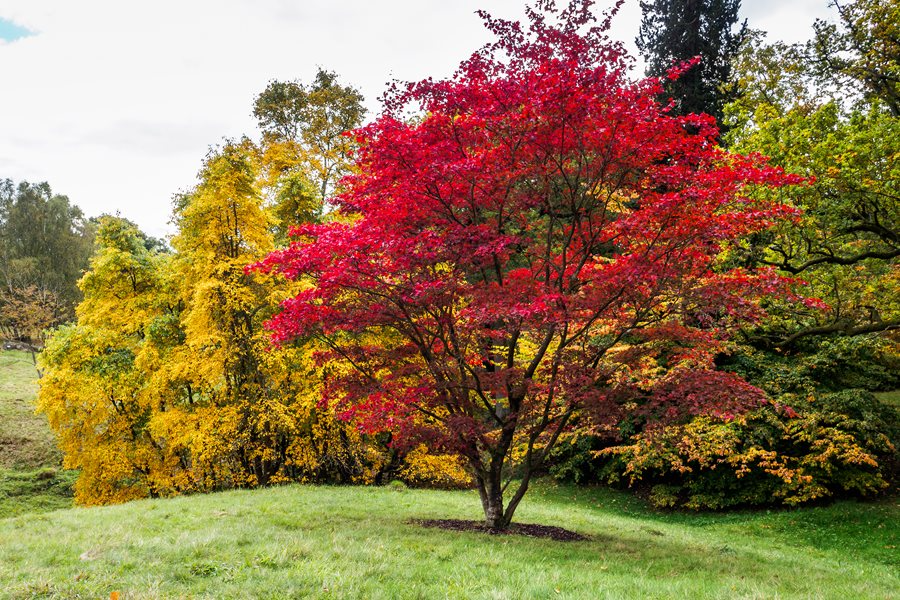
Japanese maples are the classic candidates. Light summer thinning reveals their layered branch structure and keeps them airy rather than congested. Remove small interior twigs and any branches growing straight up or back toward the trunk, always favoring the graceful horizontal lines these trees are known for.
Crabapples and other spring bloomers can be shaped now too, though with a lighter hand. Their flower buds for next spring begin forming in mid to late summer, so finish any shaping by the end of July to protect next year's show. Remove water sprouts, suckers at the base, and crossing branches, but resist heavy cutting.
How to Make the Right Cuts
Good shaping is about removal, not reduction. Take entire branches back to their point of origin, cutting just outside the branch collar, that slightly swollen ring where the branch meets the trunk or a larger limb. The collar contains the tissue that seals the wound, so never cut into it and never leave a stub beyond it.
Avoid shearing or topping ornamental trees under any circumstances. Topping destroys the natural form, invites decay, and triggers a thicket of weak upright shoots that ruin the silhouette. A well shaped tree should look like nothing happened, only better.
Work slowly and keep your total removal under about twenty percent of the canopy in a single season. Step back often, view the tree from several angles, and stop before you think you are done. You can always take more next season, but you cannot put a branch back.
Aftercare Through the Heat
A freshly shaped tree appreciates a little support during dry August stretches. Water deeply once a week if rain is scarce, letting the moisture soak well into our fast draining sandy soils. Shallow daily watering does little for tree roots.
Refresh mulch to a depth of two to three inches over the root zone, keeping it pulled back from the trunk itself. Skip fertilizer for now. Pushing new growth after summer pruning stresses the tree and produces soft shoots that will not harden off before winter arrives in Portsmouth.
Keep an eye on your cuts over the following weeks. Healthy trees seal small wounds quickly, and no paint or sealer is needed. If you notice oozing, dieback, or wilting beyond the pruned areas, that is a signal to bring in a professional for a closer look.
When to Call in the Experts
Shaping an ornamental tree well takes a trained eye and a patient hand. One wrong cut can take years to grow out, while the right cuts can transform a tree in an afternoon. That is exactly the work we love.
Expert Pruning provides professional ornamental tree shaping, fine pruning, shrub care, and seasonal garden maintenance for homeowners throughout Portsmouth and the surrounding area. If your maples, dogwoods, or crabapples deserve a skilled touch this summer, we are here to help.
Contact us today to schedule a consultation.
Email: info@expertpruning.com
Phone: (603) 999-7470
