

Top Tools for Late-Summer Pruning Jobs in Exeter
Top Tools for Late-Summer Pruning Jobs in Exeter
Ask any seasoned gardener what makes pruning easier, and they'll rarely start with technique. They'll start with tools. The right blade, sharp and clean and suited to the job, turns a frustrating afternoon into a satisfying one, and it makes all the difference to your plants' health. Here on the Seacoast, where late-summer pruning calls for precision and care, having the proper tools in hand matters more than most homeowners realize.
I've pruned gardens across Exeter and the surrounding towns for many years, and I've watched countless people struggle with the wrong tool for the task, or a good tool gone dull. Let me walk you through the essentials for late-summer work, and why each one earns its place in the shed.
Why the Right Tool Protects Your Plants
A clean cut heals. A ragged, crushed cut invites trouble. That's the heart of why tool selection matters, especially in our humid coastal climate where fungal issues are always waiting for an opening.
In our Zone 6b gardens, late-summer humidity keeps disease pressure high right through August. A dull or dirty blade tears plant tissue and leaves wounds that seal slowly, giving pathogens a foothold. Sharp, clean tools let your plants close their cuts quickly and get back to the business of growing. The tool isn't just about your convenience; it's about the plant's recovery.
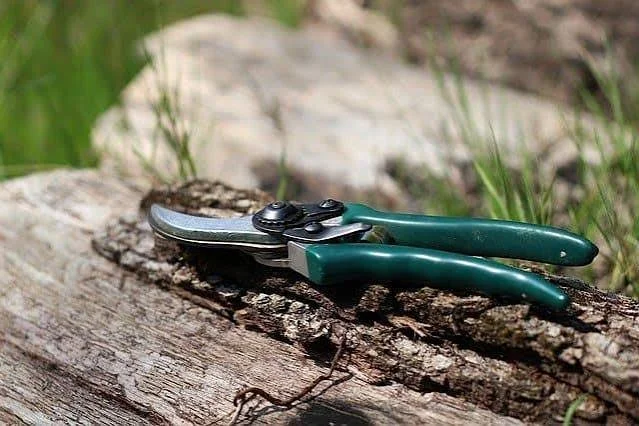
Bypass Pruners: The Everyday Essential
If you own one pruning tool, make it a good pair of bypass pruners. Unlike anvil pruners, which crush stems against a flat surface, bypass pruners slice cleanly like scissors, leaving a tidy cut that heals well. For deadheading roses, trimming perennials, and cutting stems up to about half an inch, they're indispensable.
Look for a pair that feels balanced in your hand and can be sharpened and taken apart for cleaning. A quality pair lasts years with proper care. In late summer, you'll reach for these more than anything else in your kit.
Loppers for Reach and Leverage
When abranch is too thick for hand pruners, generally more than half an inch, loppers step in. Their long handles give you the leverage to cut cleanly through branches up to an inch or more, and they let you reach into shrubs and small trees without crawling in after them.
Choose bypass loppers over the anvil style for the same reason as pruners: cleaner cuts that heal faster. For the crossing branches and dead wood you'll find in Exeter's ornamental trees and mature shrubs this time of year, a good pair of loppers saves both your hands and your plants.
A Pruning Saw for the Bigger Cuts
For anything an inch or more in diameter, put down the loppers and reach for a pruning saw. Forcing loppers through a branch too thick for them crushes the wood and strains the tool. A sharp pruning saw, by contrast, glides through larger limbs with a clean, controlled cut.
The folding varieties are handy and safe to carry, while a curved fixed-blade saw offers more power for serious work. Either way, this is the tool for removing larger dead limbs from ornamental trees, the kind of cut that keeps a tree sound heading into our storm-prone autumn.
Hedge Shears for Shape and Form
If you're tidying hedges or shaping dense shrubs in late summer, hedge shears earn their keep. Their long, flat blades let you trim an even surface across the outer growth, restoring crisp lines without cutting into old wood. For light late-summer shaping, they're exactly right.
For longer runs of hedge, a well-maintained powered trimmer speeds the work, but the same rule applies: keep the blades sharp and clean. Along Exeter's tree-lined streets and older properties, a neatly shaped hedge does quiet, lasting work for a garden's overall look.
The Tools You Might Overlook
A few less glamorous items round out the kit. A sturdy pair of gloves protects your hands from thorns and sap, and a good folding pruning knife handles small, precise cuts. A bucket or tarp makes cleanup far easier, keeping your beds tidy as you go.
Just as important is a small bottle of rubbing alcohol or a disinfecting wipe. Cleaning your blades between plants prevents you from spreading disease from one to the next, which is especially valuable in our damp coastal air. It's a small habit that protects your whole garden.
Keeping Your Tools in Shape
Even the finest tools fail you when neglected. Wipe down your blades after each use to remove sap and moisture, and sharpen them regularly so every cut stays clean. A drop of oil on the pivot keeps the action smooth and prevents rust in our humid Seacoast climate.
Store your tools dry and out of the weather, and they'll serve you faithfully for years. Good tools, well cared for, are one of the best investments a gardener can make.
If your late-summer pruning list has grown longer than your afternoon allows, we'd be glad to lend a skilled hand. At Expert Pruning, we bring a Master Gardener's eye and professional tools to pruning, shrub care, ornamental trees, weeding, and mulching for gardens throughout Exeter and the wider Seacoast. Reach out today, and let's keep your garden healthy and beautiful into fall.
Expert Pruning | Location: North Hampton, NH, Serving Seacoast NH and Southern Maine | Contact: info@expertpruning.com, (603) 999-7470
