

Fruit Tree Pruning for Maximum Bloom and Fruit Set
Growing Healthier Orchards on the Seacoast
There is nothing quite like picking a ripe apple or pear from your own backyard. Across Portsmouth, Rye, Exeter, and North Hampton, fruit trees are treasured additions to Seacoast gardens. They provide spring blossoms, summer shade, and autumn harvest all in one graceful form. But if you want abundant bloom and consistent fruit set, pruning is essential. As a Master Gardener working in Zone 6b along the Seacoast of New Hampshire and Southern Maine, I often tell homeowners that fruit tree pruning is both an art and a science. Done thoughtfully and at the right time, it improves structure, increases sunlight penetration, and encourages stronger, more productive growth.
Why Pruning Matters for Fruit Production
Fruit trees naturally want to grow tall and full. Without guidance, they produce dense canopies that limit airflow and light. When sunlight cannot reach inner branches, flower bud formation declines and fruit quality suffers. Over time, this overcrowding can also lead to smaller fruit and increased pest pressure. Proper pruning opens the canopy and restores balance. It allows light to reach developing buds, strengthens fruiting wood, and improves air circulation, reducing the risk of fungal diseases common in humid Seacoast summers. Thoughtful cuts also help the tree direct its energy into fewer, stronger branches rather than excessive leafy growth. The result is stronger bloom, better pollination, larger fruit, and more reliable fruit set year after year.
Encouraging Fruit Spurs
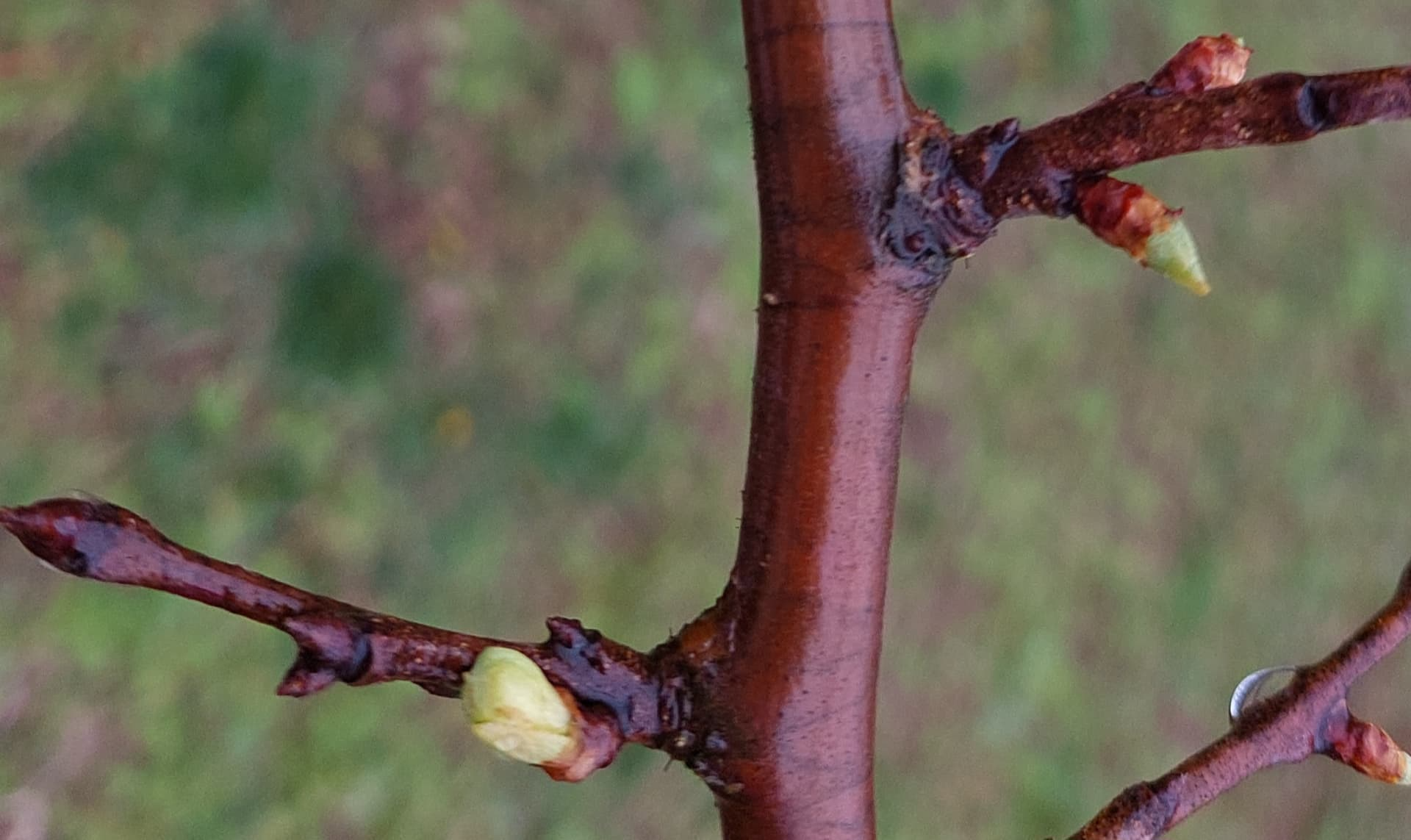
Many fruit trees produce fruit on short, stubby branches called spurs. These develop over time on properly maintained limbs. Excessive cutting can remove productive spurs, while careful thinning preserves and strengthens them.
In Exeter and North Hampton gardens, we often guide homeowners to prune lightly but consistently. Removing about one quarter of the previous year’s growth is usually sufficient to stimulate healthy bloom without overwhelming the tree.
Understanding Bloom and Fruit Set
In Zone 6b, most apple and pear trees set their flower buds during the previous growing season. Those buds overwinter on the branches and open in spring once temperatures begin to rise across the Seacoast. If too much vegetative growth shades these buds, bloom can be reduced and fruit set becomes inconsistent. Pruning helps maintain the right balance between leafy growth and productive fruiting wood. By thinning crowded branches and removing overly vigorous shoots, you direct the tree’s energy toward flower bud development rather than excessive foliage. This balance is essential for steady harvests year after year. Stone fruits such as peaches and plums follow a slightly different pattern. They fruit primarily on younger wood, often from the previous season’s growth. Annual pruning encourages the formation of strong new shoots that will carry next year’s crop. Without regular pruning, stone fruits quickly lose productivity and become more susceptible to disease and breakage.
The Best Time to Prune
For most fruit trees in Portsmouth, Rye, and Exeter, late winter is the ideal time for structural pruning. Trees are dormant, making it easier to see branch structure without leaves. Pruning at this stage stimulates strong spring growth.
Avoid heavy pruning in late summer or fall. New growth produced too late may not harden off before winter. Timing your cuts carefully supports both bloom and long term tree health.
Building a Strong Framework
A well structured fruit tree begins with a clear central leader or an open center form, depending on the species. Removing crossing branches and thinning crowded growth creates space for light and air.
Focus on eliminating weak, damaged, or inward growing branches. Aim for evenly spaced limbs that allow sunlight to reach the center of the tree. In coastal areas like Rye and Portsmouth, where wind exposure can be significant, balanced structure also improves stability.
Soil Health and Mulching
Pruning alone cannot guarantee maximum bloom and fruit set. Healthy soil supports strong root systems and nutrient uptake. Compost incorporated around the root zone improves soil structure, especially in sandy Seacoast soils.
A layer of mulch helps conserve moisture and regulate soil temperature during summer heat. Mulch also reduces weed competition, which is particularly important for young trees establishing themselves in new plantings.
Managing Tree Height and Accessibility
One of the practical benefits of annual pruning is maintaining manageable tree height. Fruit trees that grow too tall become difficult to harvest and maintain. Lower, well shaped trees are easier to inspect for pests and to thin fruit when necessary.
Keeping trees accessible also supports better overall care. Regular inspection allows you to address issues early and maintain tree vigor season after season.
Thinning for Better Fruit Quality
After bloom, thinning excess fruit can improve size and flavor. When too many fruits develop on a single branch, they compete for nutrients. Removing some of the young fruit allows the remaining ones to mature fully.
Thinning also reduces strain on branches and helps prevent breakage. Combined with proper pruning, this practice supports both immediate harvest quality and long term tree health.
Integrating Fruit Trees Into Fine Gardening
Fruit trees are not just productive plants. They are ornamental features that enhance the overall landscape. Their spring blossoms complement nearby shrubs and ornamental trees, while their structure adds year round interest.
Coordinating fruit tree pruning with broader shrub care, mulching, and seasonal maintenance creates a cohesive garden plan. In many Seacoast properties, fruit trees serve as focal points within thoughtfully designed fine gardens.
Common Mistakes to Avoid
The most common mistake I see is either over pruning or not pruning at all. Removing too much growth can reduce bloom for a season. Neglecting pruning leads to dense canopies and declining fruit quality.
Another mistake is using dull or improper tools. Clean, sharp tools make precise cuts that heal quickly. This reduces the risk of disease and supports stronger recovery.
Professional Guidance for Long Term Success
Fruit tree pruning requires knowledge of species, growth patterns, and local climate conditions. In the Seacoast region, where coastal winds, fluctuating temperatures, and varied soil types influence tree performance, experience matters.
Professional pruning ensures cuts are made strategically to support maximum bloom and fruit set. It also protects the long term structure and longevity of your trees.
With proper timing, thoughtful technique, and local expertise, your fruit trees can reward you with abundant blossoms and generous harvests for years to come. Let Expert Pruning help you cultivate healthier trees and a more productive, beautiful landscape.
For expert fruit tree pruning and professional garden care, contact us at 📧info@expertpruning.com or call 📞 (603) 999-7470to schedule your consultation.
