

How to Prune Early-Spring Flowering Shrubs After Bloom
How to Prune Early-Spring Flowering Shrubs After Bloom
There is a narrow and often overlooked window that opens every spring on the New Hampshire Seacoast, right after the forsythia fades and the last lilac blooms begin to brown at the edges. It lasts only a few weeks, and if you miss it, you will be waiting a full year to try again. For homeowners in Hampton and throughout the Seacoast region, pruning early-spring flowering shrubs at exactly the right moment — immediately after bloom — is one of the most important and most misunderstood tasks in the seasonal garden calendar.
The good news is that once you understand why the timing matters, the decision-making becomes simple. These shrubs bloom on old wood, meaning the flower buds were formed last summer and carried through winter. Prune before bloom and you lose the flowers. Prune right after bloom and you give the plant the entire growing season to set new buds for next year.
Why Post-Bloom Pruning Is Non-Negotiable for These Shrubs
Spring-flowering shrubs operate on a biological clock that most homeowners never see. From late spring through midsummer, the plant is quietly setting next year's flower buds on the new growth it produces after blooming. The longer you wait to prune after bloom, the more of that new bud-bearing growth you will end up removing. In our Zone 6b coastal climate, where the growing season is compressed at both ends by late frosts and early cold, every week of that bud-setting window matters.
Pruning these shrubs in fall or early spring — as many homeowners instinctively do — removes the very wood that carries next year's display. A forsythia or rhododendron that gets sheared in April will still leaf out and look healthy through the summer, which is why the mistake often goes unnoticed until the following spring, when the plant produces few or no flowers and the homeowner wonders what went wrong.
The Shrubs That Fall Into This Category
Forsythia is the most familiar old-wood bloomer on the Seacoast and one of the most frequently over-pruned shrubs in the residential landscape. Left to its natural arching habit and pruned correctly after bloom, it is a graceful, generous shrub — sheared into a tight ball on a regular basis, it becomes a woody, congested mass that blooms weakly and looks rigid through three seasons of the year.
Lilac is another Seacoast garden staple that blooms on old wood and responds beautifully to thoughtful post-bloom pruning. Removing the spent flower clusters promptly after bloom, along with any dead, crossing, or congested stems, directs the plant's energy into strong new growth and next year's bud set. Viburnum, weigela, mock orange, and most azaleas follow the same pattern — bloom on old wood, prune immediately after, allow the season's new growth to develop undisturbed through summer.
Rhododendron deserves special mention because it is both one of the most common broadleaf evergreens in coastal New Hampshire gardens and one of the most frequently mishandled. Post-bloom deadheading — removing the spent flower trusses before they set seed — diverts significant energy back into the plant and improves next year's bloom noticeably. Light shaping can be done at the same time, but hard renovation pruning on rhododendron should be staged carefully over two to three seasons to avoid shocking the plant.
How to Make the Cuts Count
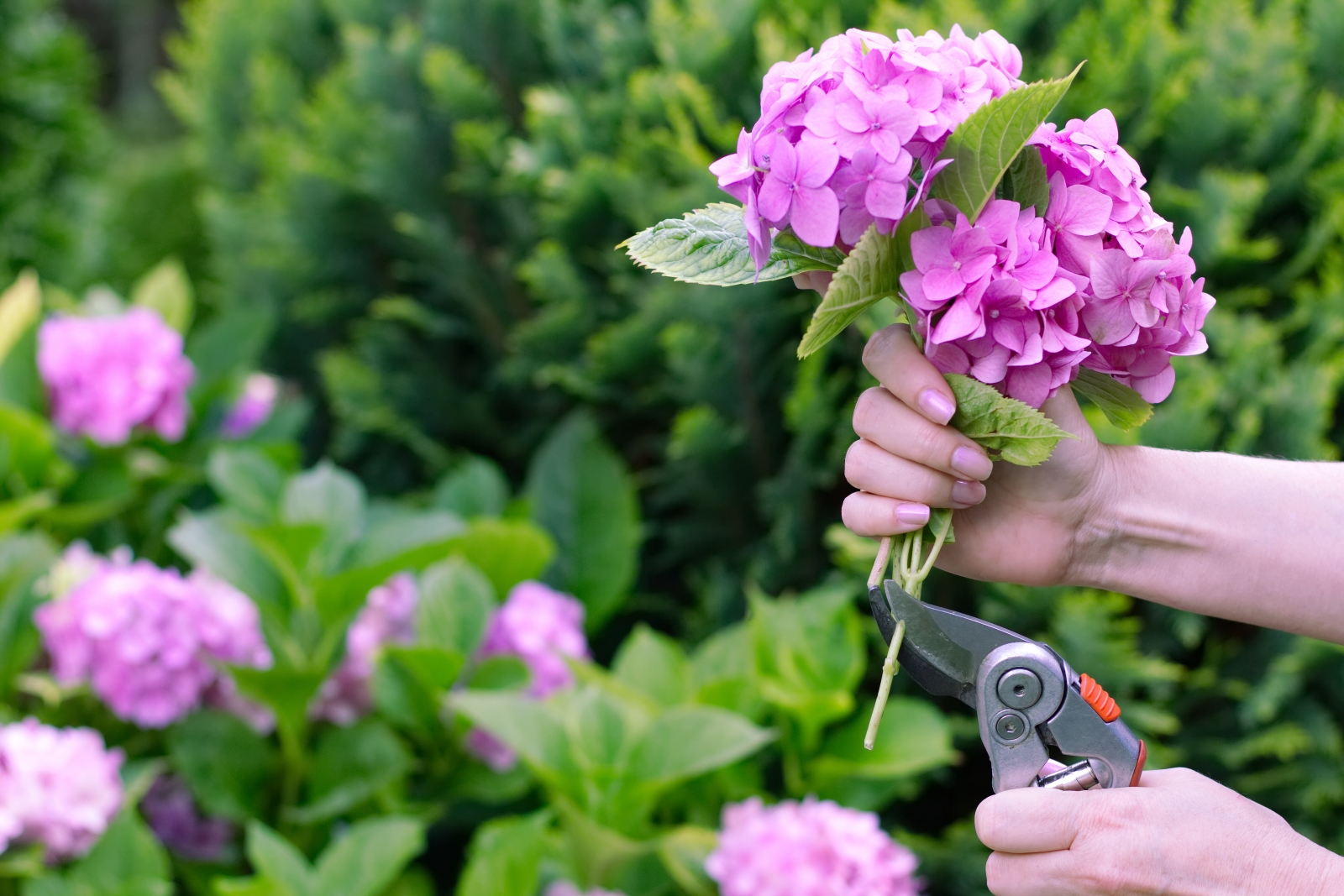
Begin by removing all spent flower clusters, cutting just above the first set of healthy leaves below the bloom. Then step back and assess the overall structure before making any additional cuts. Look for dead, broken, or crossing branches, stems that crowd the center of the plant and restrict airflow, and any growth that pulls the shrub out of its natural shape. In our coastal Zone 6b gardens, good airflow through the interior of a shrub is not just aesthetic — it directly reduces the fungal disease pressure that humid Seacoast summers can bring.
For shrubs that have become genuinely overgrown — forsythia pushing twelve feet in every direction, lilacs with thick trunks and weak bloom — a staged renewal approach is far safer than cutting everything back at once. Remove no more than one third of the oldest, thickest stems each year at ground level, allowing younger, more productive growth to take over gradually. After three seasons of this approach, most overgrown shrubs are transformed without ever looking stripped or stressed.
Always use clean, sharp tools and disinfect your blades between plants if you are working through a garden that has any disease history. A clean cut heals far faster than a torn or crushed one, and tool hygiene is a simple practice that protects your plants from one of the most preventable forms of garden damage.
Let Expert Pruning Handle the Timing for You
Knowing when to prune is half the work — executing it correctly, plant by plant, with the right cuts and the right tools, is the other half. Expert Pruning provides professional shrub pruning and seasonal garden care throughout Hampton and the greater New Hampshire Seacoast, from post-bloom shaping and renewal pruning to full seasonal programs that keep your landscape looking its best year-round. Call us today at (603) 770-5072 to schedule your post-bloom pruning visit — your shrubs have done their part this spring, and now is exactly the right moment to set them up for next year.
