

Pruning Forsythia for Shape and Longevity in Kittery, Maine
Pruning Forsythia for Shape and Longevity in Kittery, Maine
Few shrubs announce spring more reliably than forsythia. Before the trees have leafed out and while the garden beds are still showing bare soil, forsythia lights up fence lines, property edges, and foundation plantings with that unmistakable blaze of yellow that signals, more than anything else, that winter is truly finished with us. For homeowners in Kittery, Maine, forsythia is often one of the first shrubs they inherited when they moved in — and one of the most frequently pruned incorrectly.
The difference between a forsythia that blooms generously year after year and one that produces a thin, disappointing display from a dense thicket of woody stems almost always comes down to pruning — specifically, whether it was done at the right time, in the right way, and with an understanding of how the plant actually grows.
Understanding How Forsythia Grows
Forsythia is a fast-growing, multi-stemmed shrub that naturally wants to arch outward and upward in graceful, fountain-like canes. Left entirely alone, it will grow eight to ten feet tall and equally wide, producing flowers on the previous season's wood in a generous cascade that follows the line of those arching branches. This is the plant's natural and most beautiful habit — and it is entirely at odds with the way forsythia is most commonly managed, which is to shear it into a tight, rounded shape on a regular basis.
Shearing produces a dense outer shell of short, twiggy growth that blooms weakly, shades out the interior of the plant, and gradually builds up a congested mass of crossing, unproductive wood at the center. In Kittery's coastal Zone 6b climate, where plants are already managing salt air, sandy soils, and wind exposure, a chronically sheared forsythia is also a stressed one — working harder than it needs to for a fraction of the flowering display it is capable of producing.
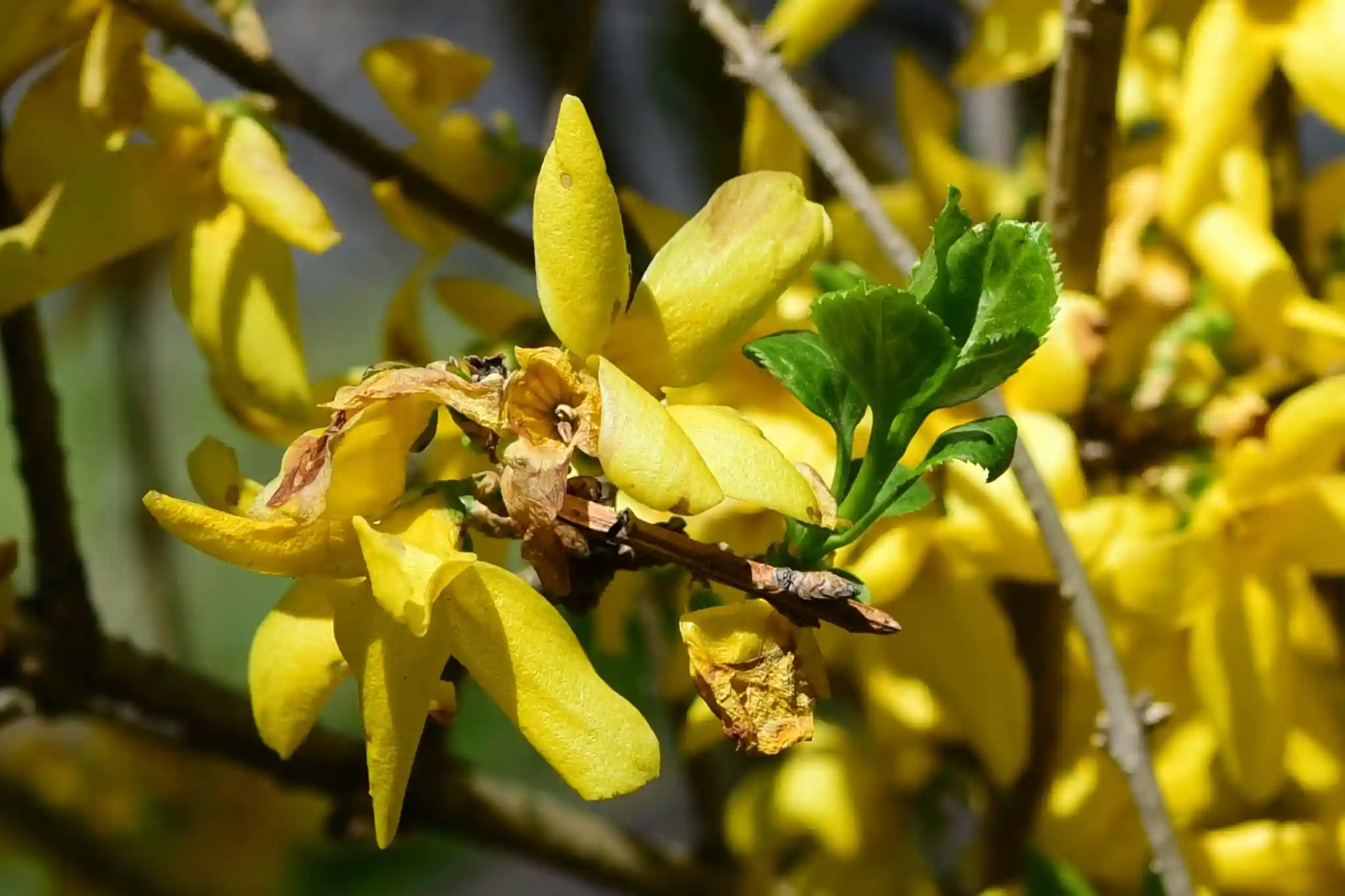
When to Prune Forsythia
Timing is everything with forsythia, and the rule is non-negotiable: prune immediately after bloom, not before. Forsythia sets its flower buds the previous summer on new wood, carries them through winter, and opens them in early spring before the leaves emerge. Any pruning done before or during bloom removes those buds and eliminates the season's flowering display entirely. In Kittery, Maine, bloom typically runs from late March through mid-April depending on the season, and the pruning window opens the moment the last flowers begin to fade.
Waiting a week or two after the final blooms drop is perfectly fine — and actually gives you a cleaner view of the branch structure before the foliage fully fills in. What you want to avoid is waiting until midsummer, when the new growth that will carry next year's buds is already well underway. Pruning too late in the season removes the very wood you are trying to protect.
How to Prune Forsythia the Right Way
Begin with renewal pruning rather than shaping. Each year after bloom, remove one quarter to one third of the oldest, thickest canes at or near ground level using loppers or a pruning saw. These older canes — typically darker gray, thicker than your thumb, and producing weaker bloom — are the ones robbing the plant of vigor. Removing them gradually over three to four seasons opens the center of the shrub to light and airflow, stimulates strong new growth from the base, and shifts the plant's energy toward productive, bloom-bearing wood.
Once the oldest canes are addressed, step back and evaluate the overall silhouette. Remove any crossing or rubbing branches, trim back any canes that extend awkwardly beyond the natural outline of the plant, and clean up the base of any thin, wispy growth that will never contribute meaningfully to structure or bloom. The goal is a plant with an open, arching framework — airy enough to see through slightly, with canes that flow naturally rather than crowding each other.
For forsythia that has been sheared for years and has built up a dense, woody interior, a staged renovation over two to three seasons is the most reliable path to recovery. Resist the temptation to cut everything back at once — forsythia tolerates hard pruning reasonably well, but a full renovation in a single season, combined with the stresses of Kittery's coastal environment, can set the plant back significantly.
Aftercare Following Pruning
After pruning, a light top-dressing of compost around the base of the shrub — kept well away from the crown — helps replenish the organic matter that Kittery's sandy coastal soils lack naturally. A two-inch layer of shredded bark mulch over the root zone retains moisture through the dry stretches of summer and moderates soil temperature as the season heats up. Deep watering in the weeks following pruning supports the flush of new growth the plant will produce, and that new growth is exactly what will carry next year's bloom.
Let Expert Pruning Restore Your Forsythia
A well-pruned forsythia is a genuinely beautiful shrub — arching, generous, and alive with color every spring for decades. Expert Pruning provides professional forsythia care and shrub pruning throughout Kittery, Maine, from post-bloom shaping and renewal pruning to full shrub renovation programs.
Call us today at (603) 770-5072 for professional forsythia care and lasting beauty in your landscape — your shrubs deserve the attention, and spring is exactly the right moment to give it to them.
