

Summer Hedge Trimming: Keeping Privacy and Shape in Exeter Gardens
Keeping Privacy and Shape in Exeter Gardens
Summer is prime time for hedge maintenance in Exeter, when fast spring growth has settled and a good trim can keep boundaries crisp through the rest of the season. Whether your hedge serves as a privacy screen, a windbreak, or simply a tidy line dividing garden rooms, midsummer offers a window to shape it without the stress of cutting into hardened, late season wood. Done thoughtfully, this trim sets your hedge up to hold its form well into autumn.
Privet, boxwood, arborvitae, and yew are common choices in Exeter landscapes, and each responds a little differently to summer shearing. Fast growing privet often needs a second trim by midsummer just to keep pace, while boxwood and yew can usually coast on one solid early summer shaping. Arborvitae, a favorite for privacy screens along property lines, benefits from attention to its growth pattern since it does not reliably regenerate from bare wood the way some broadleaf hedges do.
Reading Your Hedge Before You Cut
Before any blades come out, walk the length of your hedge and look at where new growth has pushed beyond your desired line. In Exeter's variable summer weather, hedges often grow unevenly, with sunnier sides filling in faster than shaded interior sections. Note any thin or bare patches now, since these areas need a lighter touch to encourage fill rather than a hard cut that could set them back further.
This is also the moment to check for pests or disease hiding within dense growth. Boxwood in particular can harbor issues like leafminer or fungal leaf spot in humid, poorly ventilated interiors, conditions that are common in our coastal summer air. A quick inspection now lets you address problems before they're sealed inside a freshly trimmed hedge.
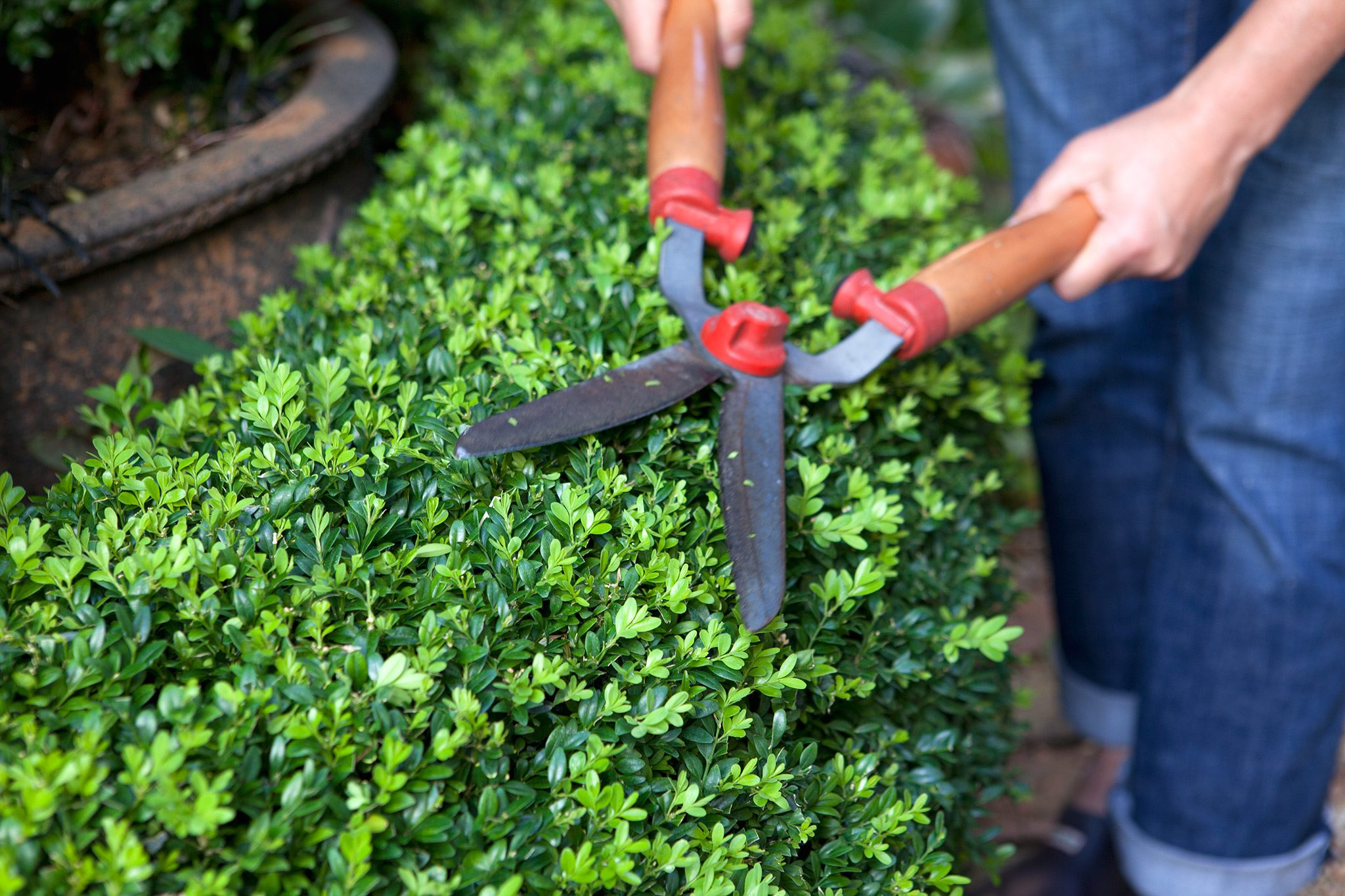
Shaping for Privacy Without Overdoing It
When trimming for privacy, the goal is density along the sides and a slightly tapered top, often called a batter, where the base is a touch wider than the top. This shape allows sunlight to reach lower branches, keeping the hedge full from top to bottom rather than thin and leggy near the ground. A hedge that is wider at the top than the bottom will shade out its own lower growth over time, leading to gaps that are difficult to fill back in.
For most established hedges, removing no more than the current season's new growth is a safe approach for midsummer trimming. This keeps the hedge dense and green without forcing it to push a flush of tender new growth too late in the season, which can be more vulnerable to early frost damage here in Zone 6b. If your hedge has grown significantly beyond its intended footprint, plan a more substantial reduction for late winter when the plant is dormant and better able to handle the stress.
Tools and Technique
Sharp, clean blades make a significant difference in how your hedge looks and heals after trimming. Dull shears tear foliage rather than cutting cleanly, leaving ragged edges that brown and detract from the crisp line you're working to create. Disinfect blades between different hedges or shrubs, especially if you've noticed any disease symptoms, to avoid spreading problems through your Exeter garden.
For straight lines, a string line or stake guide can help maintain consistency along long runs, especially valuable for privacy hedges that run the length of a property. Step back periodically to check your progress from a distance, since hedges can look quite different up close than they do from where you'll actually view them, like a patio or window.
Mulching and Moisture After Trimming
Freshly trimmed hedges benefit from a check on their root zone, particularly during the heat of midsummer when Exeter's soils can dry quickly between rains. A two to three inch layer of mulch helps retain moisture and moderates soil temperature, supporting the hedge as it recovers from trimming and pushes any remaining seasonal growth. Keep mulch pulled back from the base of the stems to avoid trapping moisture against the bark.
Deep, consistent watering after trimming helps hedges recover their energy reserves more quickly, especially for evergreens like arborvitae and boxwood that draw on stored resources to support new foliage. This is particularly important for hedges in sandy or fast draining soils common throughout Exeter properties, where water moves through the root zone quickly and may need more frequent attention during dry stretches.
Planning Ahead for Fall and Winter
As you trim this summer, take note of any hedges that may need more significant renovation. Hedges with large gaps, woody bare patches, or an overgrown footprint are best addressed with a renovation plan timed for late winter dormancy, when hard cuts are less stressful and regrowth has the entire growing season to fill back in. Marking these areas now, while they're fresh in your mind, makes planning for next season's work much easier.
When to Call in the Professionals
A well shaped hedge is one of the most visible features of a property, and getting the line right, especially on long privacy screens or mature specimens, takes a practiced eye. If your Exeter hedges need shaping, have grown beyond easy reach, or show signs of thinning that concern you, a professional trim can restore both their form and their health.
Expert Pruning has years of experience shaping hedges throughout Exeter, balancing privacy, structure, and plant health for every property we work with. If you would like help keeping your hedges crisp this summer or want to plan a renovation for next season, reach out today.
Contact Expert Pruning at info@expertpruning.com or call (603) 999-7470 to schedule your consultation.
